Humanoid APAC Humanoid APAC Asia's First Humanoid Robot Media
  • News
  • Brands
  • Trends
  • About
EN 繁中 简中 日本語
Subscribe
  • News
  • Brands
  • Trends
  • About
  • Subscribe
EN 繁中 简中 日本語
APAC Intelligence

APAC Humanoid Robot Trends

Deep analysis of the forces shaping humanoid robotics across Asia-Pacific — from China's manufacturing scale to Japan's precision edge to Singapore's policy ambition.

Filter
🇨🇳 China Manufacturing

China's Humanoid Manufacturing Tsunami: How AGIBOT and Unitree Are Rewriting Global Industry

China's dominance in humanoid robot manufacturing didn't happen by accident. The combination of a government-designated strategic sector, automotive-grade supply chains, and a cohort of founders from elite AI labs has created conditions no other country can replicate at speed. In 2025 alone, Chinese companies shipped 90% of all humanoid robots globally — a figure that would have seemed impossible five years ago when the entire category barely existed commercially.

AGIBOT's 10,000-unit milestone in March 2026 is the headline, but the deeper story is the infrastructure behind it. BYD's supply chain division provides motors and actuators at automotive volume pricing — cutting per-unit costs by an estimated 40% versus robotics-only procurement. Tencent's Hunyuan LLM runs the natural language interface. State subsidies under the "Embodied Intelligence" initiative cover up to 30% of capital expenditure for qualifying deployments. The pieces fit together with an efficiency no Western competitor can match.

The competitive implication for APAC manufacturers is stark: a commercially available, enterprise-grade humanoid robot at $35,000–$45,000 per unit is now a real procurement decision, not a speculative technology bet. Foxconn, Hyundai, and a dozen other major manufacturers are in active discussions to deploy Chinese-made humanoids at scale. The question is no longer whether humanoids will reshape Asian manufacturing — it's how fast and whose robots win.

13,000+
Units shipped globally in 2025 (90% from China)
10,000
AGIBOT milestone: units shipped commercially
~40%
Cost advantage vs. Western platforms
China Manufacturing AGIBOT Unitree Supply Chain
🇯🇵 Japan Manufacturing

Japan's Precision Automation Renaissance: Why Kaizen-Quality Humanoids Command a Premium

Japan faces a demographic crisis that is reshaping its manufacturing priorities. With the working-age population shrinking by 600,000 per year and manufacturing employing 16% of the national workforce, the country's industrial base cannot maintain quality and output without automation. But Japan's answer to this challenge is distinctly Japanese: instead of competing on price and volume, its robotics companies are targeting the high-precision, high-value applications where a premium for reliability is not just acceptable — it's expected.

Kawada Robotics' NEXTAGE S exemplifies this philosophy. Its "teach-by-demo" AI system — co-developed with Preferred Networks — allows the robot to learn a 12-step assembly task from a single human demonstration in under 45 minutes. The system is trained on 20 years of Kawada's factory motion data, giving it generalisation capabilities that pure simulation-trained competitors cannot match. Toyota, Denso, and Panasonic deploy NEXTAGE units on precision assembly lines where a single defect triggers multi-million dollar recalls.

SoftBank Robotics is simultaneously building the world's largest installed base of service humanoids — 27,000 Pepper units across 70 countries — while developing a next generation of industrial service robots. The combination of Kawada's precision cobots and SoftBank's service scale gives Japan a two-pronged strategy: dominate high-value industrial niches and the service sector, rather than competing directly with China's volume play.

600,000
Working-age population decline per year in Japan
99.2%
NEXTAGE S yield rate after 24 hrs deployment
27,000+
Pepper humanoid deployments across 70 countries
Japan Manufacturing Kawada Robotics SoftBank Precision
🇰🇷 South Korea Investment

Korea's Samsung Bet: Why the World's Largest Chip Maker Is Going All-In on Humanoid Robots

Samsung's $120 million lead investment in Rainbow Robotics' Series C is more than a financial bet on a promising startup — it's a strategic hedge against the most pressing operational risk in its semiconductor empire. The Pyeongtaek complex, the largest chip factory in the world by floor area, faces a structural shortage of cleanroom-certified technicians that no amount of salary premium can fully solve. Humanoid robots that can operate in cleanroom environments represent a multi-billion dollar opportunity that Samsung is uniquely positioned to capture — if it owns equity in the technology provider.

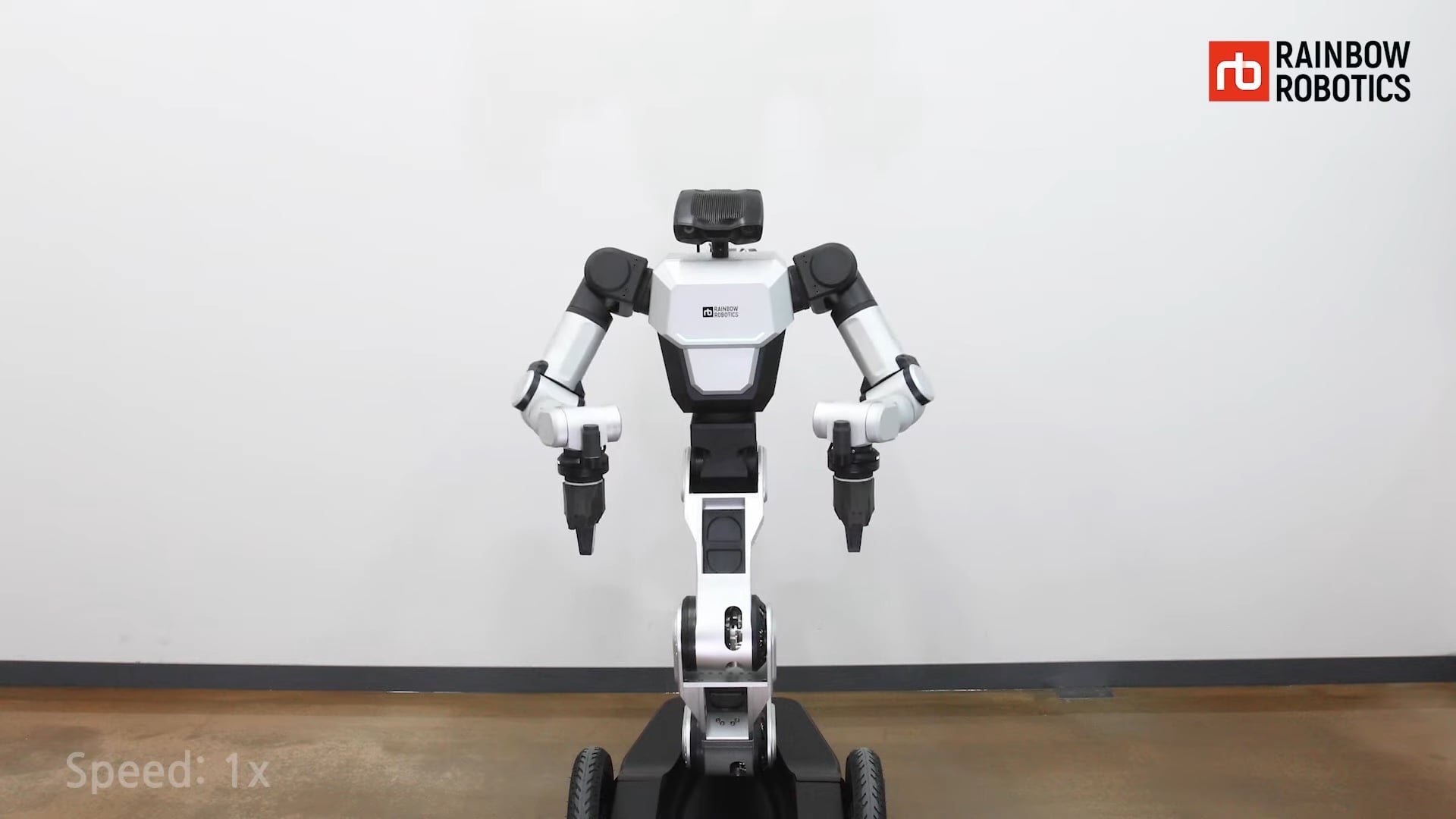
Rainbow Robotics' RB-Y1 was specifically designed with this use case in mind. Its hybrid wheel-leg locomotion handles the flat corridors and occasional step obstacles of cleanroom facilities. Its KAIST-developed dexterous hands — with 16 actuated joints and all-fingertip tactile sensing — can handle 300mm silicon wafers with the delicacy required. Current pilots at Samsung Display's Asan facility, handling OLED panel transfers, are generating the production data needed to validate the platform for Pyeongtaek's more demanding wafer-handling tasks.

The broader signal from Samsung's bet is that humanoid robots are no longer a technology story in Korea — they are a supply chain sovereignty story. Owning a competitive Korean humanoid platform insulates Samsung and South Korea's manufacturing sector from dependency on Chinese-manufactured robots for their most sensitive production assets. Hyundai Robotics is making the same calculation with Boston Dynamics, and LG Electronics is developing its own service humanoid for hospitality and retail. Korea's chaebol system is moving in concert toward a national humanoid capability.

$120M
Samsung lead investment in Rainbow Robotics Series C
$1.4B
RB-Y1 post-money valuation
#1
Pyeongtaek Fab: world's largest semiconductor factory by floor area
South Korea Samsung Rainbow Robotics Semiconductor Investment
🇹🇼 Taiwan Technology

Taiwan's Supply Chain-to-Maker Leap: How Silicon Island Is Building Its First Complete Humanoids

Taiwan has supplied the global humanoid robot supply chain for years without anyone noticing. TSMC fabricates the AI processors that run every major humanoid. Delta Electronics and TECO supply servo motors. Hiwin and Harmonic Drive supply the precision gearing. PCB makers in Taoyuan and Hsinchu produce the control boards. Taiwan is, in a very real sense, the hardware heart of the global humanoid industry — yet until 2026, not a single Taiwanese company had assembled all those components into a commercially viable complete robot.

Techman Robot's TM Xplore I changes that narrative. Built on NVIDIA Jetson Orin and trained using Isaac GR00T, it brings Taiwan's proven vision system — already deployed in 40,000 collaborative robots worldwide — into a wheeled humanoid body. The VLA model demonstrated at NVIDIA GTC 2026 completed HDMI cable harness assembly with 94% first-attempt success, a task widely considered the benchmark for dexterous manipulation in industrial robotics. Foxconn's parallel development of a bipedal humanoid for internal deployment adds a second Taiwanese entrant to the category simultaneously.

The government's NT$20 billion smart robotics commitment — NT$10B from the National Science and Technology Council plus NT$10B from the National Development Fund — creates the financial runway for Taiwan's ecosystem to develop at least three "complete system" humanoid companies by 2028. With its structural cost advantage from integrated supply chains, Taiwan's humanoid makers will be price-competitive from day one. The question is whether the island can build the AI software talent to match the hardware edge it already has.

40,000+
Techman cobots deployed globally
NT$20B
Government smart robotics fund commitment
94%
TM Xplore I: cable assembly first-attempt success
Taiwan Techman Robot NVIDIA Supply Chain Technology
🇸🇬 Singapore Policy

Singapore's $500M Gambit: How a City of 4 Million Is Outmanoeuvring Larger Nations for Humanoid Leadership

Singapore has a population smaller than many individual cities it competes with globally, yet it consistently outpunches its weight in technology attraction. The EDB's SGD 670 million Humanoid Robotics Attraction Fund follows the same playbook that turned Singapore into a semiconductor and biotech hub — identify the strategic industry before it matures, write the policy and funding framework ahead of the competition, and attract anchor companies with a combination of grants, talent, and regulatory flexibility that no regional competitor can match.

The fund's two-track structure is shrewd. The $300M anchor investment tranche targets global manufacturers — AGIBOT, Boston Dynamics, Rainbow Robotics are all in discussions. The $200M venture co-investment track, managed with Temasek, targets the software and simulation layer that will ultimately be worth more than the hardware. Singapore's proximity to both Chinese supply chains and Western enterprise customers makes it the natural bridging market for companies that need to operate across that divide. The 8,000-square-metre Humanoid Robotics Testbed opening in JID in Q1 2027 provides the physical infrastructure that validates the pitch.

The labour economics underpin the policy rationale. Singapore's 4 million residents and among Asia's highest per-capita labour costs make every sector — logistics, healthcare, hospitality — acutely sensitive to automation opportunities. The government's estimate that humanoids could offset 15% of Singapore's projected labour shortfall by 2030 is not aspirational — it's a budget calculation. The country that designs the regulatory framework for humanoid deployment in public spaces, hospitals, and transit systems first will set the template for the rest of Southeast Asia.

SGD 670M
EDB Humanoid Robotics Attraction Fund ($500M USD)
5,000
Target specialist roles created by 2028
20
Target R&D centres established by 2028
Singapore EDB Policy ASEAN Investment
🌏 APAC Technology

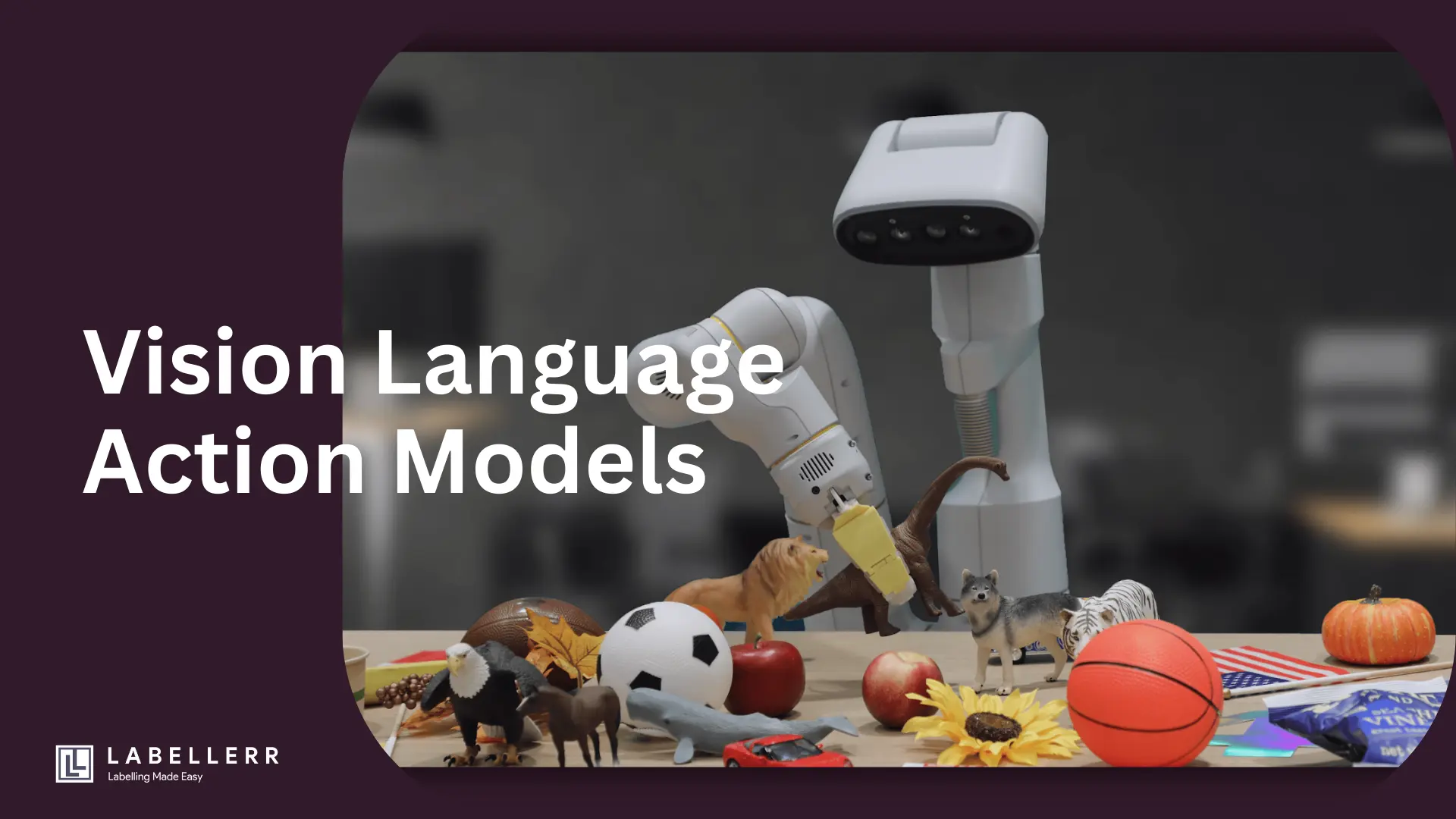
The VLA Revolution: How Vision-Language-Action Models Are Making Humanoids Programmable by Anyone

The single biggest barrier to humanoid robot deployment in industry has never been the hardware — it's been the programming. Traditional industrial robots require 3–5 days of specialist programming for a single new task, with substantial rework every time a part geometry changes. The emergence of vision-language-action (VLA) models — AI systems that accept natural language instructions and visual inputs to generate robot motion — is dismantling that barrier faster than most industry observers anticipated.

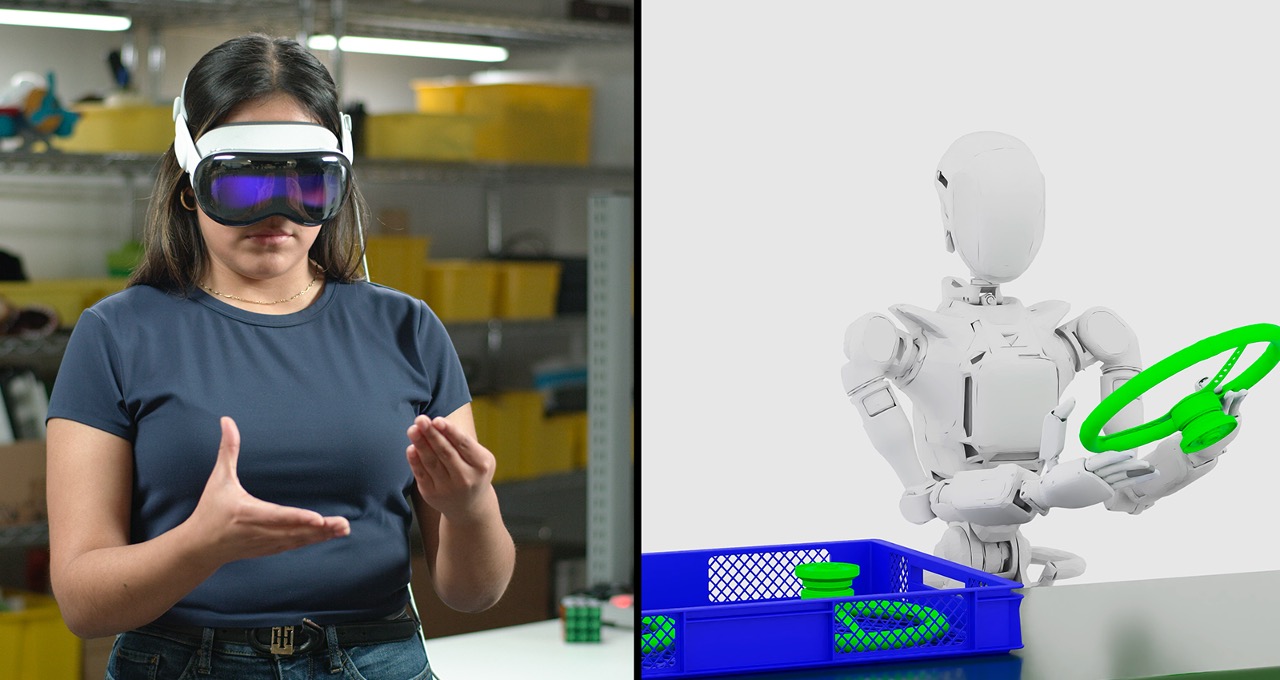
Three APAC companies are leading this shift. Kawada Robotics, with Preferred Networks, has deployed imitation learning trained on 20 years of factory motion data — enabling the NEXTAGE S to learn a new 12-step task from a single 45-minute demonstration. Techman Robot, using NVIDIA Isaac GR00T, demonstrated cable harness assembly at NVIDIA GTC with 94% first-attempt success from a model trained partly on digital twin simulation data. AGIBOT runs Tencent's Hunyuan LLM as its natural language command interface, allowing factory workers to assign tasks verbally in Mandarin without any programming.

The strategic implication is profound: the "programmability moat" that kept humanoids out of general industry is collapsing. The next 18 months will see VLA-capable robots from APAC manufacturers deployed on general factory floors for the first time — not just in carefully controlled pilots, but in production. The companies that build the largest and most diverse training datasets will establish a durable AI advantage that hardware specs alone cannot replicate. This is where the real competition is being waged.

3–5 days
Traditional programming time per new robot task
45 min
NEXTAGE S with VLA: time to learn a 12-step task
94%
TM Xplore I: first-attempt cable assembly success
AI VLA Models Technology NVIDIA Kawada Techman
🌏 APAC Healthcare

Healthcare Humanoids: Why Asian Hospitals Are Becoming the Proving Ground for Human-Robot Coexistence

The factory floor has been the primary deployment environment for APAC's first wave of commercial humanoids, but the next wave is taking shape in an entirely different setting: hospitals. Asia's rapidly ageing populations — Japan has the world's oldest, South Korea and Taiwan are ageing fastest among developing nations — are creating simultaneous shortfalls in both nursing staff and elder care capacity. Humanoid robots that can assist with patient logistics, sample transport, and medication delivery represent a response to a genuine systemic need, not a technology demonstration.

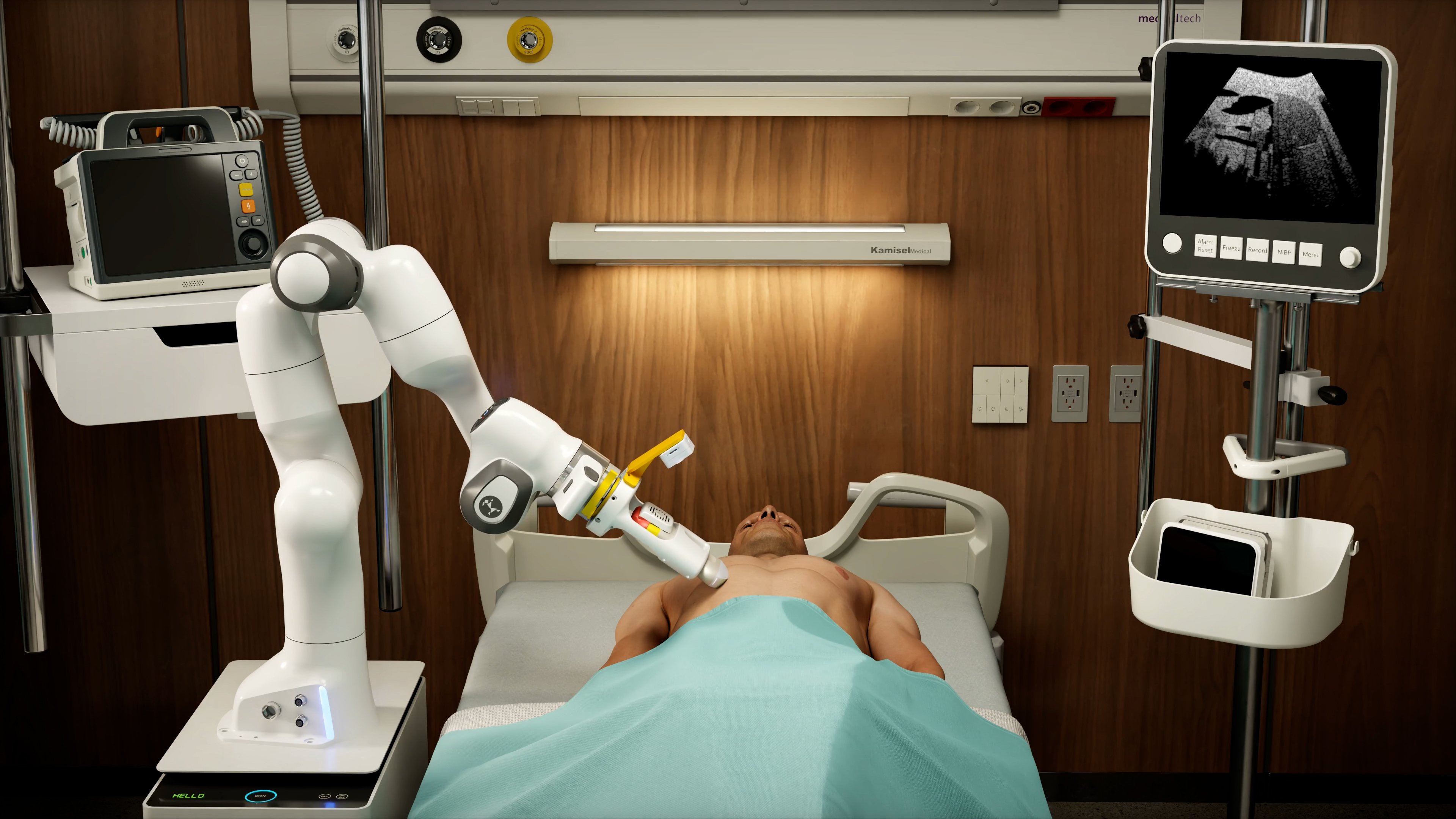
The clearest example is Nurabot, developed jointly by Foxconn and Kawasaki, which began real-world deployment at Taichung Veterans General Hospital in Taiwan in late 2025. The robot delivers medicine, carries test samples, and handles routine transport tasks that previously consumed nursing staff time. Early operational data shows a reduction in nurse non-clinical workload of up to 30%, and the hospital has requested expansion of the programme. Japan's Kawasaki is working on a successor model with enhanced dexterous handling for surgical instrument management.

Singapore's healthcare system is explicitly factored into the EDB's humanoid roadmap — the Humanoid Robotics Testbed in Jurong Innovation District includes a healthcare simulation environment specifically designed for testing hospital deployment scenarios. South Korea's Samsung and Rainbow Robotics are both evaluating their platforms for cleanroom-adjacent healthcare settings. The regulatory frameworks being established in Taiwan and Singapore for humanoid hospital deployment will become templates for the rest of Asia — and potentially for the world.

2025
Nurabot live deployment: Taichung Veterans General Hospital
–30%
Reduction in nurse non-clinical workload
1.3B
Estimated Asia 65+ population by 2050
Healthcare Taiwan Japan Singapore Nurabot
🌏 APAC Investment

The APAC Investment Surge: Why $26 Billion Is Just the Beginning of Asia's Humanoid Robot Funding Wave

Asia-Pacific attracted over $26 billion in humanoid and embodied AI investment in 2025, dwarfing investment in any other region. The scale reflects both the maturity of the technology — commercial deployments are no longer speculative — and the structural need of Asian manufacturing economies that face demographic decline and rising labour costs simultaneously. The investment wave is not a bubble: it is a response to a real and growing market, underwritten by both private capital and government programmes that treat humanoid robotics as a strategic national priority.

The funding geography tells its own story. China leads with over $20 billion in state and private capital committed through 2025, anchored by the Ministry of Industry and Information Technology's Embodied Intelligence initiative and investment from Tencent, BYD, Baidu, and dozens of mid-size technology funds. South Korea's Samsung alone contributed $120M to Rainbow Robotics. Singapore committed $500M through EDB. Japan's Kawada and SoftBank command premium valuations for precision and scale respectively. Taiwan's government committed NT$20 billion. Every major APAC economy now has an explicit humanoid robotics investment programme.

The next 24 months will see a meaningful shakeout. Companies that cannot demonstrate commercial deployments at meaningful scale — beyond controlled pilots — will struggle to raise Series C and D rounds at current valuations. The winners will be platforms that have solved the three hard problems: reliable dexterous manipulation, sub-$50,000 unit economics, and programmability by non-specialists. All three are being solved in APAC. The investment surge isn't slowing — it's entering its most competitive phase.

$26B+
APAC humanoid & embodied AI investment in 2025
$20B+
China state + private capital committed through 2025
53%
Global humanoid market CAGR projected 2025–2030
Investment APAC China Singapore Funding
No trends match the selected filter.
Humanoid APAC Humanoid APAC Asia's First Humanoid Robot Media

Covering the humanoid robot companies, technologies, and trends shaping Asia-Pacific and the world.

© 2026 Humanoid APAC. All rights reserved. humanoidapac.com