At a glance
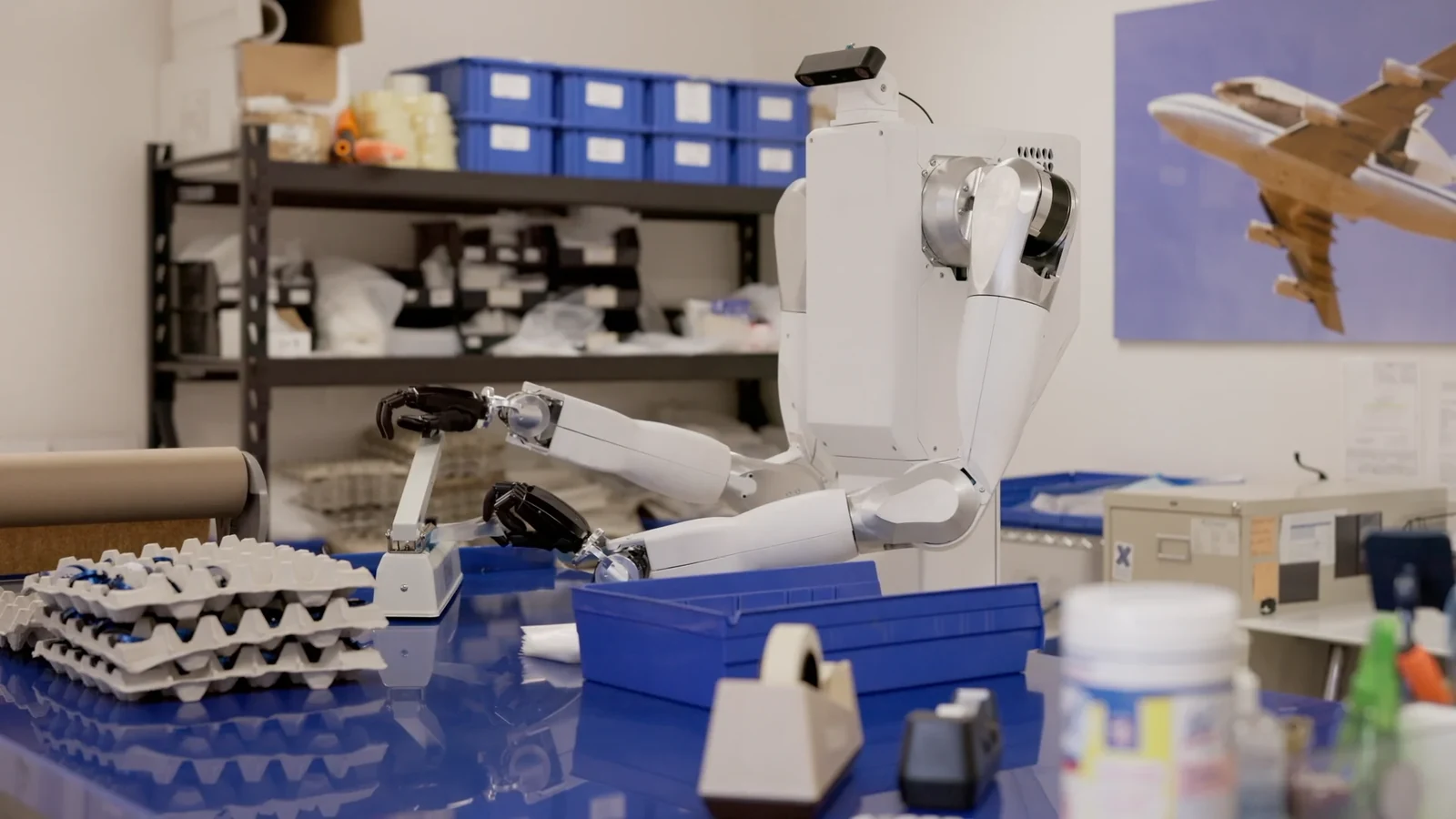
Feather Robotics launched its wheeled, dual-arm developer robot on September 24, 2026, and announced $7.6 million in funding, according to Humanoids Daily. Its listed starting price is $29,990, but detailed reliability and deployment results were not disclosed.
Feather Launches a Wheeled Humanoid Platform for Developers
Feather Robotics formally launched on September 24, 2026, with a wheeled, dual-arm humanoid presented as a platform for developers, according to Humanoids Daily. The company also announced $7.6 million in funding, but the report does not specify the funding terms or use of proceeds. Humanoids Daily
The article reports a promotional starting price of $29,990 and says Feather’s website was taking orders at publication. Feather supplies the robot, controls and software development kit, while customers can integrate external AI models and build applications; the company’s stated ability to support model integration is not a guarantee that every model will work without adaptation. Humanoids Daily’s account of the developer platform
A Mobile Base, Dual Arms and a Modular Developer Stack
Feather lists two seven-degree-of-freedom arms and a torso with 600 millimetres of vertical travel. Its omnidirectional base can move sideways without turning, and the company lists a maximum ground speed of 1.3 metres per second. Humanoids Daily
The published payload figures distinguish 1.8 kilograms rated per arm from a 6.8-kilogram peak payload, while advertised battery life is ten hours with two hot-swappable batteries. Listed tools include Python and ROS 2 support, teleoperation, simulation support, collision detection, interchangeable end effectors and swappable onboard compute; the article says some tools remain in development. Humanoids Daily’s report on specifications and tools
Editorial Analysis: APAC Integrators Should Test the Whole Workflow
For APAC developers and prospective integrators, the product’s significance is less a promise of general-purpose autonomy than an invitation to evaluate a packaged robot, control layer and SDK together. Its wheeled base, dual arms and stated ROS 2 and Python support make practical fit dependent on the intended worksite and the software a team already uses, not on the humanoid label alone.
Before purchase, teams should define a target task and ask how it will be supervised, how much payload it requires in ordinary operation, and whether sideways movement and the robot’s dimensions suit actual routes and work areas. They should also test how external models connect to Feather’s controls, what adaptation is required, and how the battery-swap routine, end effectors and collision handling affect the workflow. Those are due-diligence questions, not claims that the product has passed such tests.
What the Launch Does Not Establish, and What to Verify
Feather says the launch followed about a year of customer field testing, and CEO Hoa Mai said manufacturing was underway in the Bay Area. Mai said the current facility could produce 30 robots a month, while a planned next facility is intended to support 200; stated capacity and a future facility are not evidence of actual output. Humanoids Daily
The announcement does not disclose detailed reliability, uptime, task-success rates or deployment totals, and the reported field testing is not, by itself, proof of dependable performance or autonomy. The article says Feather’s own data-collection and training work, as well as some tools, remain in development; buyers should verify current availability, measured task results, support arrangements and the exact specifications behind payload and battery claims before committing. Humanoids Daily’s account of the stated limitations
Sources and reporting notes
Humanoids Daily reports Feather’s launch and quotes company specifications and CEO statements. The article does not provide independent performance testing or detailed reliability and deployment results.
Original synthesis and analysis of the linked public reporting. AI-assisted drafting and translation; reported claims remain attributed to their sources.