At a glance
Techman’s William Wang described plans for the TM Xplore I and a second-generation model in an interview published October 14. Research deliveries and factory trials remain plans, not evidence of proven performance or deployment.
Techman’s humanoid roadmap is staged around research and factory trials
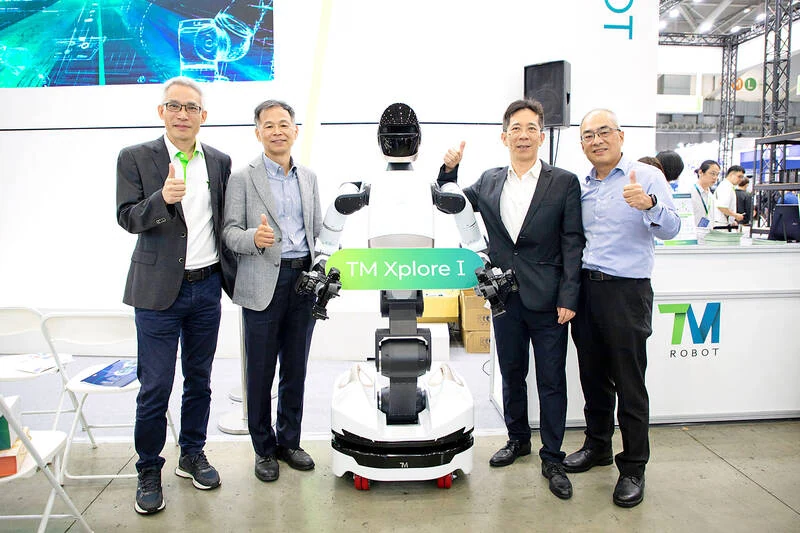
In an interview published on October 14, Techman Robot vice president William Wang described humanoid robots as a long-term opportunity while acknowledging near-term technical obstacles, including safety, precision, stability, cycle time, quality and payload. Taipei Times His comments frame the TM Xplore I story less as a deployment announcement than as a roadmap whose next steps still depend on research and testing.
Wang said the company planned to provide its second-generation model to some research institutions by the end of 2026, then conduct on-site trials with partners as early as the first quarter of 2027 and test the robot in Techman’s own factories. Techman’s humanoid trial roadmap These are future intentions reported in an interview, not completed deliveries, trials or commercial deployments.
Material handling is the stated use case; factory integration is the hurdle
Wang said the TM Xplore I, first shown the previous year, can perform material-handling and picking tasks, and that semiconductor, automotive-components, consumer-electronics and logistics companies had expressed interest.Taipei Times The account does not report independent task testing, customer deployments or measured operating results, so expressed interest should not be read as proof of readiness.
Beyond physical manipulation, Wang said humanoids need to connect with higher-level factory software, including manufacturing-execution and warehouse-control systems. factory-system integration He also said learning-based technologies could help robots change grasping methods and movement paths as environments change, while identifying AI-server assembly and inspection as a growing area of robot demand, including loading and unloading, back-end assembly and inspection. AI-server assembly and inspection
Editorial analysis: APAC buyers should evaluate the whole work cell
For APAC manufacturers, the practical question is not simply whether a humanoid can pick an object in a demonstration. Buyers should assess whether the proposed task fits a real production sequence, and whether safety controls, cycle time, repeatability, payload and inspection quality meet that site’s requirements.
Due diligence should cover the interfaces as well as the robot: which manufacturing-execution or warehouse-control functions are connected, how exceptions are handled, and who is responsible for commissioning and ongoing support. Research access or a partner trial can help answer these questions, but neither by itself establishes reliable, autonomous production.
What remains unverified in Techman’s plans and performance claims
The interview gives no independent test results or deployment metrics for the humanoid, and does not quantify its safety performance, precision, stability, cycle time, quality or payload.Taipei Times The announcement does not disclose the research institutions or partners, specific trial tasks, acceptance criteria, or how the planned systems integrations will be assessed.
Wang separately said Techman’s robot and vision-inspection solutions were already deployed at Quanta Computer factories, and identified AI-server assembly and inspection as an area of growing demand.Taipei Times Those statements concern the company’s broader robot business and do not establish that the TM Xplore I has been deployed or validated; the next meaningful checks are whether the stated deliveries and trials occur and what results they produce.
Sources and reporting notes
Based on a Taipei Times interview with Techman Robot vice president William Wang. Product capabilities, customer interest and future deliveries or trials are attributed to the company; the article provides no independent humanoid test results or deployment metrics.
Original synthesis and analysis of the linked public reporting. AI-assisted drafting and translation; reported claims remain attributed to their sources.