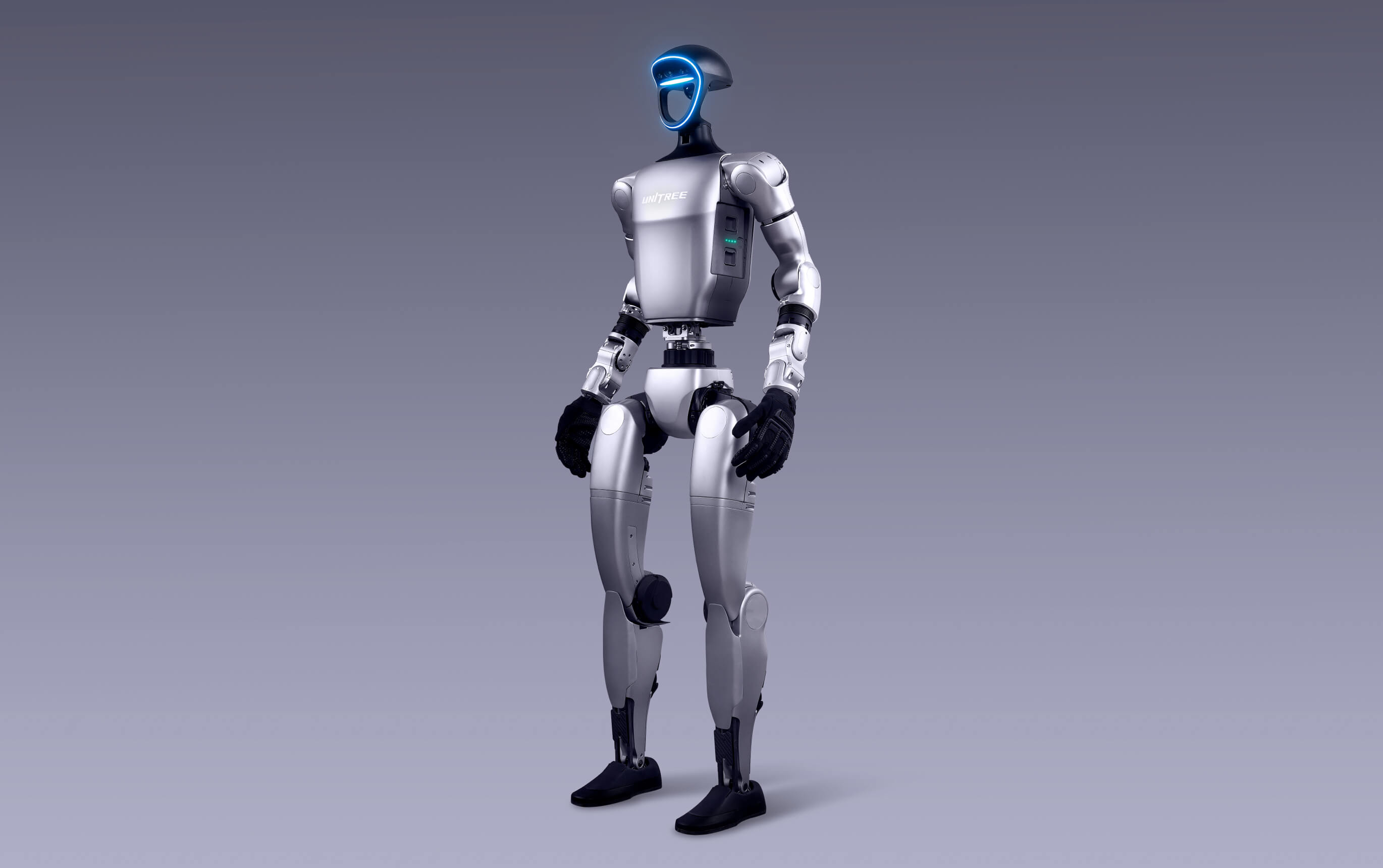
The Shanghai Stock Exchange's formal acceptance of Unitree Robotics' STAR Market IPO application on March 20, 2026 marks one of the most consequential capital markets events in the humanoid robot industry to date. Unitree, the Hangzhou-based company best known internationally for its quadruped robots, is seeking to raise CNY 4.2 billion — approximately USD 608 million — in a listing that would validate the humanoid sector's investment thesis at a scale that few predicted possible just 18 months ago.
Humanoids Overtake Quadrupeds as Revenue Core
The strategic significance of the IPO filing lies not just in the size of the raise, but in what it reveals about Unitree's business composition. Humanoid robots accounted for 52 percent of the company's revenue in 2025, decisively displacing the quadruped business that first established Unitree's global reputation. The company controls approximately 60 percent of the global quadruped market — a commanding position built over years — yet has already pivoted its center of gravity toward the more complex and more contested humanoid arena. This transition, compressed into roughly two years, represents one of the fastest product-category pivots in recent industrial technology history.
The R1 Strategy: Affordable Humanoid as Market Maker
Proceeds from the IPO are earmarked for two purposes: expanded research and development, and the construction of a new smart manufacturing facility. The latter is tied directly to Unitree's most aggressive commercial play — the R1 humanoid, priced starting at USD 4,900. At this price point, the R1 is positioned as the most affordable full humanoid robot on the market, a deliberate attempt to collapse the price barrier that has historically confined humanoid deployment to automotive tier-1 suppliers and large logistics operators. The higher-specification H2 model, priced at USD 29,900, anchors the upper end of Unitree's humanoid range. The company is targeting shipment of 20,000 humanoid units in 2026, compared with 5,500 in 2025 — a 3.6x increase that will require exactly the manufacturing scale the IPO proceeds are intended to build.
Reading the Market Signal
The IPO application arrives at a moment when STAR Market investors are acutely attuned to the humanoid robot sector following a wave of policy support from Beijing and a series of high-profile commercial milestones. Unitree's quadruped heritage — and the fact that it commands 60 percent global market share in that category — gives it a credibility advantage over pure-play humanoid startups that lack a track record of shipping at scale. The 40.45 million-plus shares being offered, alongside a structured deployment of IPO proceeds into manufacturing infrastructure, signals a company that has transitioned from startup growth mode into industrial scaling mode. For institutional investors evaluating the Chinese humanoid sector, Unitree's filing provides a rare window of financial transparency into how the economics of high-volume humanoid manufacturing actually work.
Implications for the Global Competitive Landscape
A successfully completed Unitree IPO would not merely benefit the company — it would reshape funding dynamics across the entire humanoid sector globally. When a Chinese humanoid manufacturer raises USD 608 million in public markets, it establishes a valuation reference point that every Western competitor, from Boston Dynamics to Figure AI, must now reckon with. More importantly, the IPO proceeds fund manufacturing scale that enables price compression, which in turn expands the addressable market. The R1's USD 4,900 price point, if achievable at volume, represents a commoditization trajectory that could accelerate adoption timelines across manufacturing, logistics, and services by years. That pressure will be felt in Tokyo, Seoul, and Silicon Valley equally.