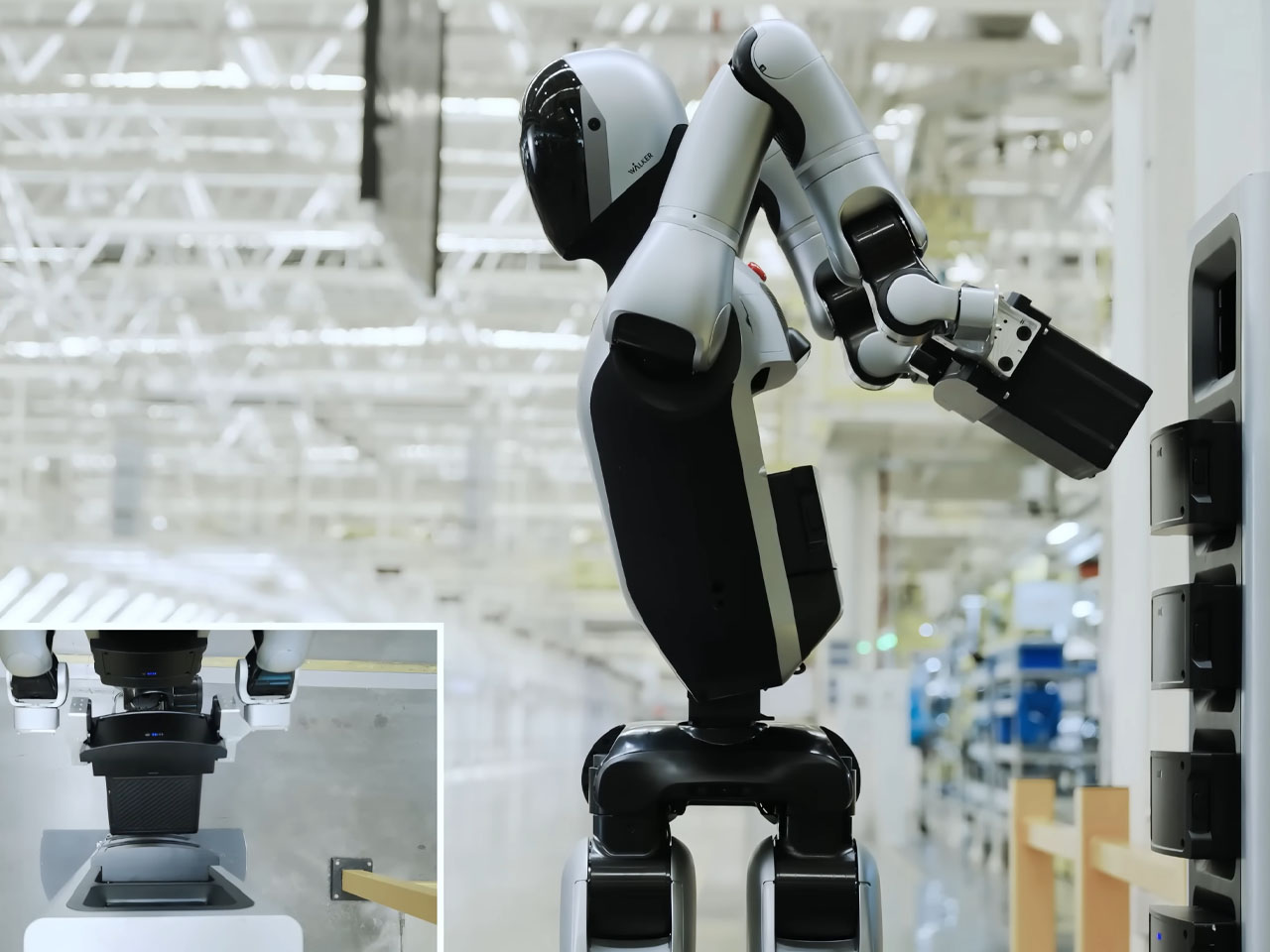
When UBTECH Robotics and Siemens Digital Industries Software signed their strategic cooperation agreement in Shenzhen on March 16, 2026, it represented more than a technology partnership between two established names. It was a blueprint for how a Chinese humanoid robot company intends to scale from hundreds to tens of thousands of units — and the role that digital manufacturing infrastructure plays in making that possible. The agreement positions Siemens as UBTECH's digital transformation partner across the full Walker S2 product lifecycle, from design and simulation through manufacturing execution and field service.
A Client List That Reads Like China's Automotive Directory
The commercial context surrounding the Siemens partnership is striking. UBTECH's Walker S2 is already deployed at some of China's most demanding manufacturing environments: FAW-Volkswagen, BAIC New Energy, Geely Automotive, BYD, SF Express, and Foxconn. This client roster spans joint ventures with European automakers, domestic Chinese EV leaders, and global electronics contract manufacturers. The variety of operating environments — from traditional combustion-engine assembly lines to cutting-edge EV production facilities to consumer electronics Foxconn floors — demonstrates that the Walker S2 is being tested against the full breadth of Chinese industrial conditions, not confined to a single sector's requirements.
From 500 to 10,000: The Production Challenge
UBTECH delivered approximately 500 Walker S2 units in 2025. Its stated target for 2026 is 10,000 units — a twentyfold increase that represents one of the steepest production ramp trajectories in the humanoid robot industry. Achieving this requires solving problems that have historically limited humanoid manufacturing: actuator supply chain consistency, software-hardware integration at scale, quality assurance for bipedal locomotion systems in diverse industrial environments, and after-sales service infrastructure capable of supporting a field population ten times larger than the previous year. Siemens' involvement addresses the digital infrastructure layer of this challenge: simulation-driven design validation, digital twin-based manufacturing process optimization, and lifecycle management tools that allow UBTECH to manage a growing installed base without linear increases in service headcount.
Financial Grounding for the Scaling Story
The financial metrics underpinning UBTECH's scaling narrative are credible. The company reported total revenue of RMB 2.001 billion in 2025, up 53.3 percent year-on-year, with the full-size humanoid robot segment alone generating RMB 821 million — up 2,203 percent — against a backdrop of Walker series orders in 2025 exceeding CNY 1.4 billion. These are not projected revenues from future contracts — they represent committed purchasing intentions from a client base that includes some of China's most disciplined procurement organizations. The order backlog provides production visibility that justifies the capital commitments involved in building toward 10,000 annual units, while the Siemens partnership provides the technical credibility to suggest the manufacturing infrastructure can actually support that ambition.
Implications for the Humanoid Supply Chain
The UBTECH-Siemens partnership highlights an often-overlooked dimension of the humanoid scaling challenge: the role of enterprise software and digital manufacturing platforms in enabling production ramps that would be impossible through traditional manufacturing approaches alone. As humanoid robots transition from research artifacts to factory assets, the companies that can most effectively integrate simulation, digital twins, and lifecycle management into their manufacturing workflows gain a compounding advantage. For global industrial software vendors, the UBTECH deal signals that humanoid robot manufacturers are becoming a significant new customer segment — one that is growing faster and requires more sophisticated tooling than most traditional manufacturing clients. The Chinese humanoid supply chain is maturing in ways that extend well beyond the robot hardware itself.