At a glance
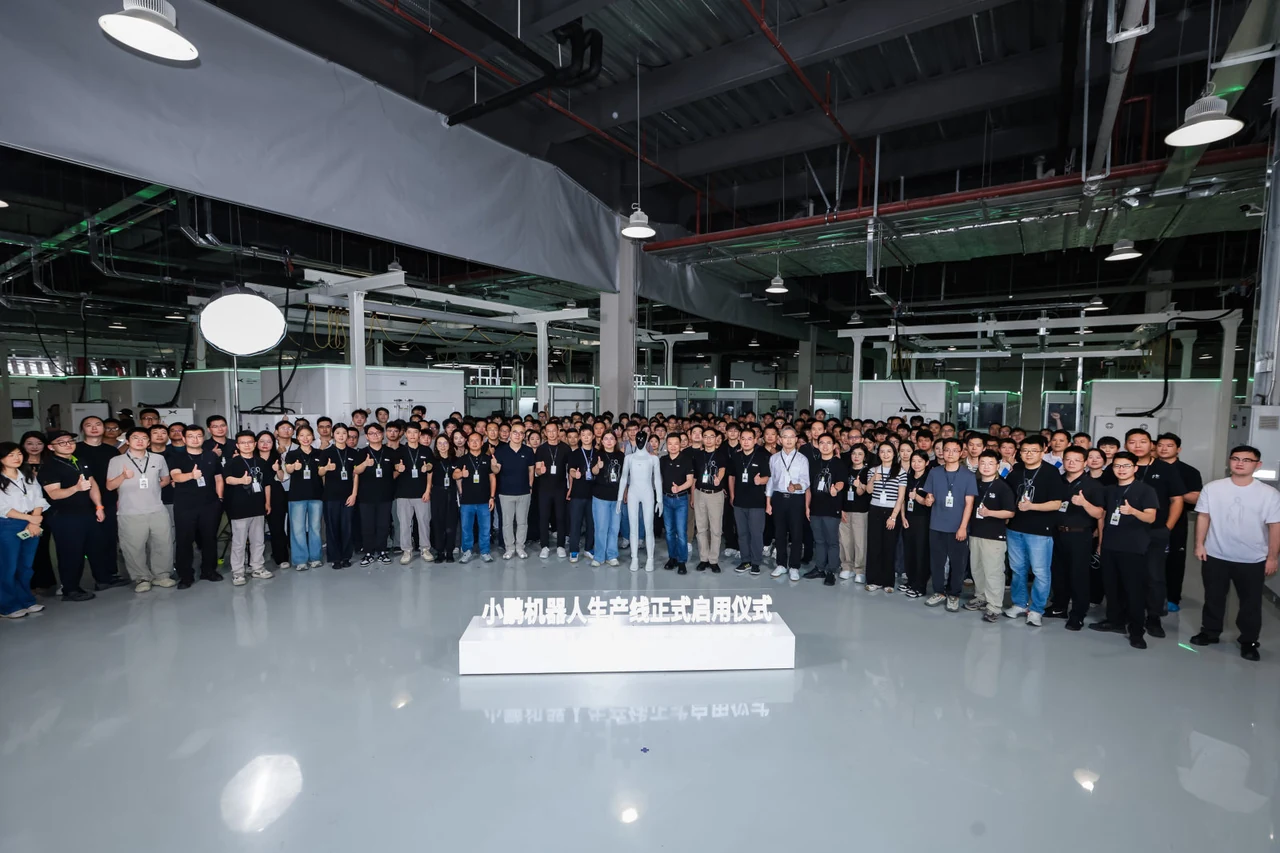
On September 8, 2026, XPENG said its IRON humanoid robot had walked off a newly commissioned production line, a step toward manufacturing beyond R&D prototyping XPENG. Mass production by year-end 2026 and market launches in 2027 are company plans, not completed milestones XPENG.
XPENG moves IRON from prototyping toward line manufacturing
XPENG says it commissioned humanoid-robot production lines and that an IRON robot completed production and then walked off one of the lines autonomously humanoid production line. The company presents the event as a transition from research-and-development prototyping toward manufacturing on a line, rather than as evidence of established high-volume output XPENG. The announcement is dated September 8, 2026, and describes the line commissioning and robot walk-off as completed events XPENG.
XPENG says more than 80% of core processes on the lines are automated and that automotive-grade quality systems are being applied to humanoid production automotive-grade quality systems. Those are manufacturer-reported process claims, not independently verified measures of yield, consistency or production capacity XPENG. The announcement does not report output volume or describe customer deployments following the line commissioning XPENG.
IRON specifications and intended commercial applications
XPENG lists IRON as having 76 degrees of freedom across its body and 21 in each hand, and says the robot uses three Turing AI chips XPENG. The company gives the chips' effective computing power as up to 2,250 TOPS, a stated specification rather than a reported result from a particular task or test XPENG. It also says its Physical AI foundation model can run on IRON to perform tasks without remote operation Physical AI foundation model.
The company describes IRON as a general-purpose platform for varied applications that can improve through real-world self-reinforcement XPENG. XPENG planned initial deployments in its own stores and campuses, with mass production targeted by the end of 2026 and official launches and deliveries in China and overseas markets planned for 2027 commercial-scenario rollout. These milestones remain plans; the announcement does not say that any of those later deployments or deliveries have taken place XPENG.
Editorial analysis: practical questions for APAC manufacturers and buyers
For APAC manufacturers considering humanoid assembly, the useful signal is not simply that a robot completed a factory-line walk-off. The more practical issue is whether line automation and automotive quality methods can produce repeatable units while keeping inspection, rework and service processes workable. Buyers should distinguish evidence of a commissioned line from evidence of sustained output, and treat the reported automation share as a claim to validate rather than a ready-made benchmark.
Potential customers in retail, campuses and other commercial settings can use the stated deployment sequence to define evaluation criteria without assuming that the plans will be met. They can ask what tasks IRON is expected to perform at each site, how success and intervention will be measured, and who bears responsibility when a task fails. For regional partners, useful diligence also includes whether local operating conditions, language needs, safety review and maintenance arrangements are addressed before a deployment is treated as repeatable.
What remains unverified and what to check next
The announcement does not disclose production volume, yield, unit-level reliability, operating hours or customer deployment results XPENG. It also provides no independent testing of the stated degrees of freedom, computing power, automation share or ability to perform tasks without remote operation XPENG. A robot walking off a line is a reported production milestone, but by itself does not demonstrate reliability, safe operation or autonomy in customer settings.
The next useful evidence would be disclosed production and quality data, repeated task results under defined conditions, and details of human intervention and safety procedures. It will also matter whether the planned in-house store and campus trials occur and what they show, before the proposed end-2026 mass-production target and 2027 market launch can be assessed. Until such information is available, the announcement establishes XPENG's manufacturing direction and stated timetable, not verified scale or commercial performance.
Sources and reporting notes
Based on XPENG's company announcement, not an independent media account. Production automation, specifications and autonomy statements are company-reported; no independent verification or performance testing is provided.
Original synthesis and analysis of the linked public reporting. AI-assisted drafting and translation; reported claims remain attributed to their sources.