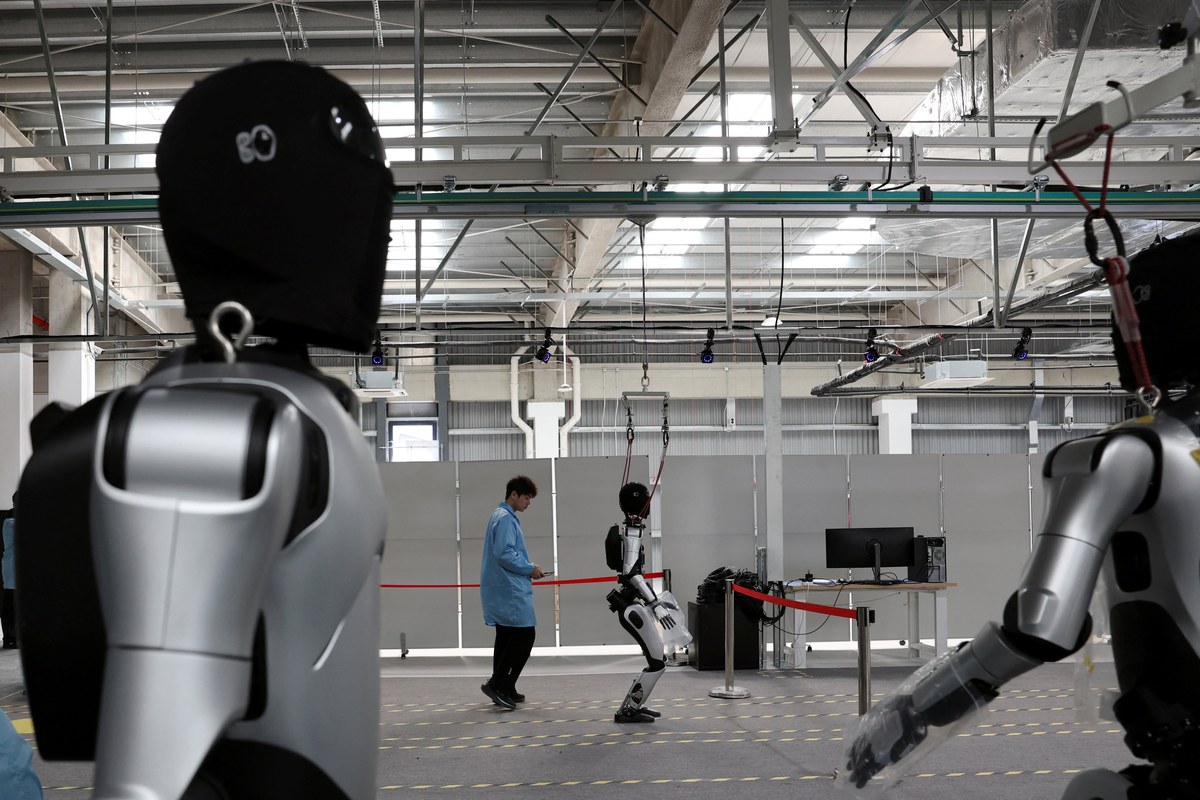
Southeast Asian media outlets, led by Malaysian and Thai coverage, are increasingly and consistently framing Chinese companion humanoids as a preview of the region's future elder-care market rather than a novelty gadget, according to The Star, which covered Always Robots' official Malaysia launch.
The underlying demographic backdrop here is direct and increasingly urgent: Malaysia, Thailand, Singapore, and Vietnam all face rising elderly-dependency ratios as populations age faster than their economies are adding trained care workers, and existing home-care labor supply cannot realistically scale to meet demand on current wage trajectories. Companion humanoids are increasingly being read by regional media as a partial answer to that widening labor gap.
A companion humanoid designed for conversational interaction and basic monitoring is a substantially different engineering problem than one designed for physical assistance — helping someone stand, preventing falls, handling medication schedules reliably. The marketing language of 'companionship' obscures how far current capability actually is from true assisted-living functionality, and that gap is exactly where liability exposure tends to concentrate once a product is marketed more broadly than its actual capability supports.
For vendors, this reframing changes the go-to-market path: a robot marketed as companionship in China can be repositioned as assisted living in ASEAN, unlocking government health-ministry partnerships, insurance frameworks, and NGO distribution channels a purely consumer positioning could never reach, since consumer electronics distribution and eldercare procurement are entirely separate commercial ecosystems with different approval cycles, different liability regimes, and very different tolerance for product failure.
Editor's take — we are skeptical of the elder-care framing exactly because it is commercially convenient for everyone quoted in these stories. Reframing a companion gadget as care infrastructure lets vendors access government budgets, lets governments look proactive on an aging-population problem they have no fast fix for, and lets media outlets write an optimistic technology story about a genuinely grim demographic trend. None of those commercial incentives actually require the robot to be genuinely safe for eldercare use yet, which is exactly why we think regulators, not marketers or vendors, should be the ones setting the vocabulary here.
By 2028, expect the first regulatory flashpoint in this category to come from a health ministry, not a consumer-protection agency, once a companion humanoid marketed loosely as elder-focused is involved in a fall, medication error, or emergency-response failure. That incident will force the industry-wide distinction between 'companionship' and 'assisted living' that marketing has so far been allowed to blur, and vendors that pre-empt it with their own voluntary certification program will fare considerably better than those caught flat-footed once regulators start asking hard questions.
What to watch next is pilot design specifically: if ASEAN pilots begin pairing humanoids with licensed care providers and national health authorities as formal partners, rather than launching primarily through retailers, the region will be on a genuinely more defensible track than pure retail launches elsewhere, and that partnership structure will be visible well before any large-scale rollout occurs.
There is a genuine risk of over-promising built into this shift. Elder-care claims trigger a fundamentally different and stricter regulatory environment than ordinary consumer electronics, and vendors that blur the line between companionship and life-safety assistance will likely face fast backlash once a real incident occurs, backlash that could set the entire regional category back by years rather than months, well beyond the single vendor or country where the incident actually occurs.