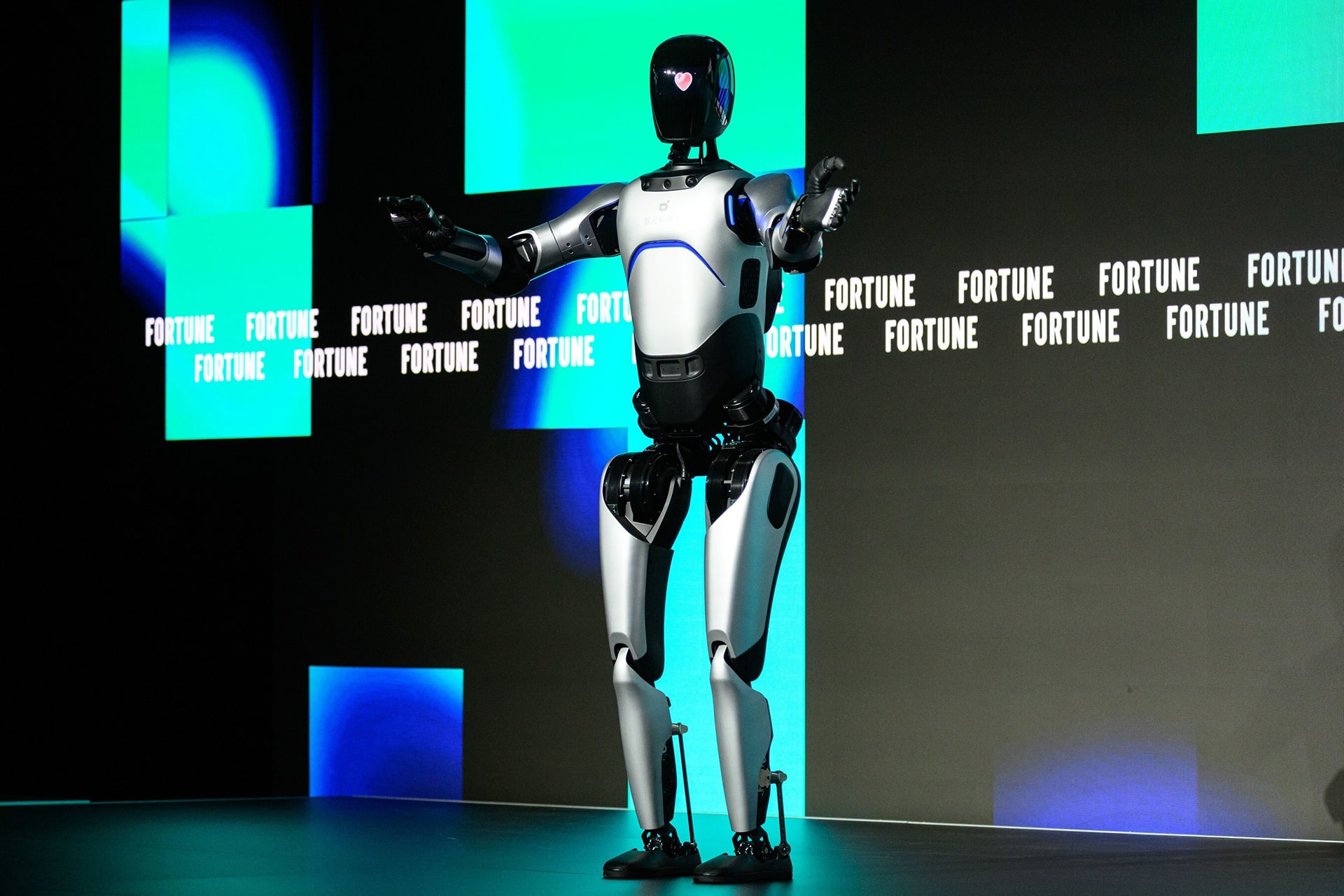
Shanghai-based AGIBOT has crossed a milestone that no humanoid robot company had reached before it: 10,000 units shipped commercially. Backed by Tencent, BYD, and Baidu, the company has cemented its position as the world's first humanoid robot mass-producer — a landmark that signals a fundamental shift in how Asia's factories are built and staffed.

The 10,000-Unit Milestone

AGIBOT's A2 model — a 1.65-metre, 55-kilogram general-purpose humanoid — rolled off its Jiading District production line in Shanghai in late March 2026, marking the company's 10,000th commercial delivery. The robots are currently deployed across automotive, electronics, and logistics facilities operated by BYD, SAIC, and JD.com, performing tasks including precision assembly, quality inspection, and warehouse picking.

The achievement puts AGIBOT well ahead of global rivals. Boston Dynamics, the US benchmark for humanoid robotics, has shipped fewer than 1,000 units of its Atlas platform to date. Tesla's Optimus remains in internal pilot phase. In Asia, the closest competitor — Unitree Robotics — had shipped approximately 4,000 units as of Q1 2026, primarily to research institutions and developers rather than production lines.

10,000+
Units shipped commercially
¥15B
Estimated valuation (Q1 2026)
3
Major backers: Tencent, BYD, Baidu

How AGIBOT Got Here

Founded in 2023 by former engineers from Baidu's robotics division, AGIBOT took an unusual approach: rather than optimising for research performance, it prioritised manufacturing cost and deployment reliability from day one. The company partnered with BYD's supply chain division to source motors, actuators, and battery packs at automotive-grade volumes — cutting unit costs by an estimated 40% compared to robotics-only supply chains.

The A2's design reflects this philosophy. Unlike Boston Dynamics' Atlas — which maximises athletic capability at the expense of repairability — AGIBOT's platform uses modular limb assemblies that can be swapped in under 20 minutes on a factory floor. Field reliability data suggests a mean time between failures of over 2,000 operating hours, a figure AGIBOT claims is industry-leading.

Tencent's involvement added a software layer that competitors lack: the robot's AI backbone runs on Tencent's Hunyuan large language model, enabling natural language task assignment from supervisors on the floor. Workers can tell the robot to "move the blue crates to line 4" in Mandarin and it will comply, navigating dynamic environments using a combination of LIDAR, depth cameras, and proprioceptive feedback.

China's Industrial Policy Advantage

AGIBOT's rise is inseparable from China's national robotics strategy. The Ministry of Industry and Information Technology's "Embodied Intelligence" initiative, launched in 2024, designated humanoid robots as a strategic sector, triggering subsidies for manufacturers and preferential access to industrial pilots.

BYD's Shenzhen facilities were among the first to qualify for the pilot programme, deploying 200 AGIBOT units across EV battery assembly lines. Early data from those deployments reportedly showed a 12% increase in throughput and a 34% reduction in assembly defects — figures that BYD has shared with the Ministry as justification for expanding the programme to additional facilities.

The Chinese government's ambition is explicit: a Ministry white paper published in January 2026 targets one million humanoid robots deployed in Chinese industry by 2030. At AGIBOT's current trajectory — doubling production capacity every 18 months — the company alone could account for 20–25% of that figure.

What It Means for Global Competition

The 10,000-unit milestone has sent a signal through the global robotics industry. AGIBOT's cost per unit is estimated at $35,000–$45,000 in volume — roughly a third of what Western competitors charge for comparable platforms. If those economics hold as production scales, China could dominate humanoid manufacturing the same way it dominates electric vehicles: through vertical integration, government support, and aggressive pricing.

For APAC manufacturers considering humanoid adoption, AGIBOT's scale creates a practical question: wait for a potentially superior Western platform, or deploy now with a proven, affordable Chinese product? Many are choosing the latter. Sources close to Foxconn indicate the company is in advanced discussions to purchase AGIBOT units for its own Shenzhen facilities — in addition to its existing UBTech partnership.

What's Next

AGIBOT has announced a 20,000-unit production target for 2026, supported by a second Shanghai factory currently under construction. The company is also expanding internationally, with distribution partnerships reportedly under negotiation in Japan, South Korea, and Singapore.

A third-generation platform — codenamed "A3" — is in development, targeting a 30% reduction in weight and the addition of dexterous hand modules capable of handling components as small as 5mm. Mass production of A3 is slated for Q4 2026.