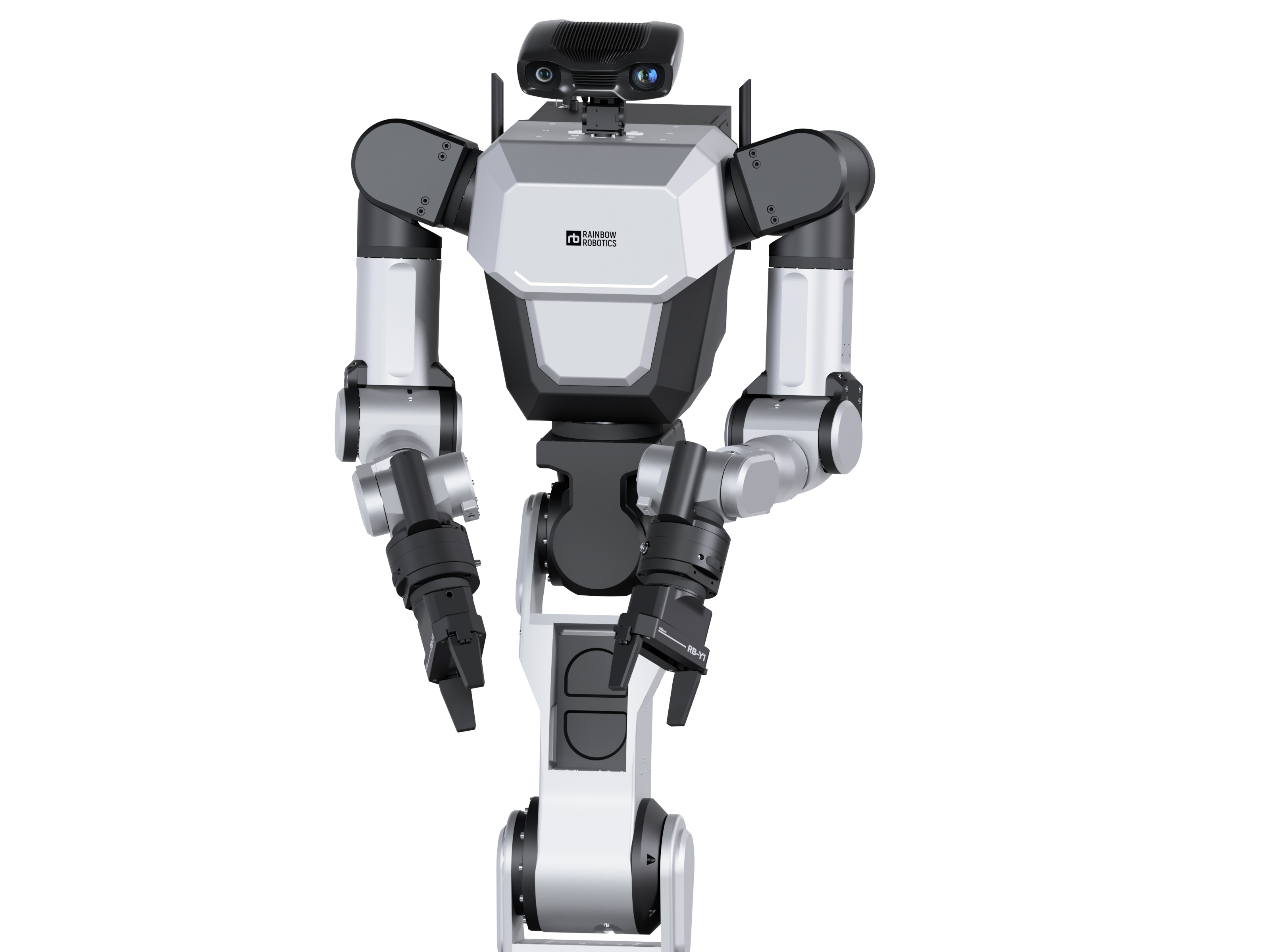
Rainbow Robotics, the KAIST spinout that pioneered bipedal locomotion research in South Korea, has closed a $200 million Series C funding round led by Samsung Electronics — its largest investor to date. The capital will fuel international expansion and the commercial scaling of its RB-Y1 humanoid platform across industrial and service markets in the US and EU.
The Round and Its Significance
Samsung's decision to lead the Series C — contributing a reported $120 million of the $200 million total — represents one of the Korean conglomerate's most significant direct robotics bets. Samsung has previously invested in autonomous robot logistics through its Harman subsidiary and explored humanoids for its semiconductor fabs in Pyeongtaek, but this is its first publicly confirmed equity stake in a humanoid platform company.
Co-investors in the round include Hyundai Ventures, Kakao Ventures, and two unnamed US institutional investors, according to sources close to the deal. The round values Rainbow Robotics at approximately $1.4 billion post-money — a four-fold increase from its Series B valuation in 2024.
The RB-Y1 Platform
Rainbow Robotics' RB-Y1 is a 1.72-metre bipedal humanoid with a wheeled-to-legged hybrid locomotion system — it can deploy wheels for fast flat-surface navigation or switch to legs for stairs and uneven terrain. The design reflects founder Dr. Oh Jun-Ho's philosophy that industrial humanoids need pragmatic locomotion, not athletic performance.
The RB-Y1's arms each carry 7 degrees of freedom with a 5-kilogram payload per hand, enabling it to handle everything from automotive door panels to delicate electronics components. Its dexterous hand — developed in partnership with KAIST's robotics department — features 16 actuated joints and tactile sensing on all fingertip surfaces.
Current deployments include pilots at Samsung Display's Asan facility, where 12 RB-Y1 units are handling OLED panel transfer operations, and at a Hyundai automotive assembly plant in Ulsan, where the robots assist with door sealing tasks on the Ioniq 7 production line.
Samsung's Strategic Play
For Samsung, the investment is both financial and strategic. Its Pyeongtaek semiconductor complex — the largest chip factory in the world by floor area — faces a chronic shortage of skilled technicians for cleanroom maintenance and wafer handling tasks. Humanoid robots capable of operating in cleanroom environments represent a multi-billion dollar opportunity for Samsung, and owning equity in the technology provider gives it preferential access to platform customisation.
Industry analysts note that Samsung's investment also provides insurance against being locked out of humanoid supply chains dominated by Chinese competitors. A Samsung-backed Korean platform gives the company — and South Korea's broader manufacturing sector — a sovereign alternative to AGIBOT and Unitree.
Global Expansion Plans
Rainbow Robotics' CEO Lee Jung-ho confirmed that $80 million of the Series C will fund overseas operations, beginning with a US sales and engineering office in San Jose opening in Q3 2026 and a European distributor network centred on Germany and the Netherlands launching in Q4 2026.
The company is targeting 500 RB-Y1 deployments by end-2026 and 3,000 by end-2027, with a particular focus on semiconductor and electronics manufacturing — sectors where South Korean engineering credibility carries weight with procurement teams in the US, Taiwan, and EU.
Korea's Humanoid Ecosystem Matures
Rainbow Robotics' raise is the largest single funding event in South Korea's robotics sector to date, and it arrives amid a broader acceleration in Korean humanoid investment. Hyundai Robotics has been deepening its Boston Dynamics integration after acquiring the US firm; LG Electronics is developing its own service humanoid for hospitality and retail; and the Korean government's Korea Institute of Science and Technology has announced a ₩200 billion robotics research programme targeting embodied AI by 2028.