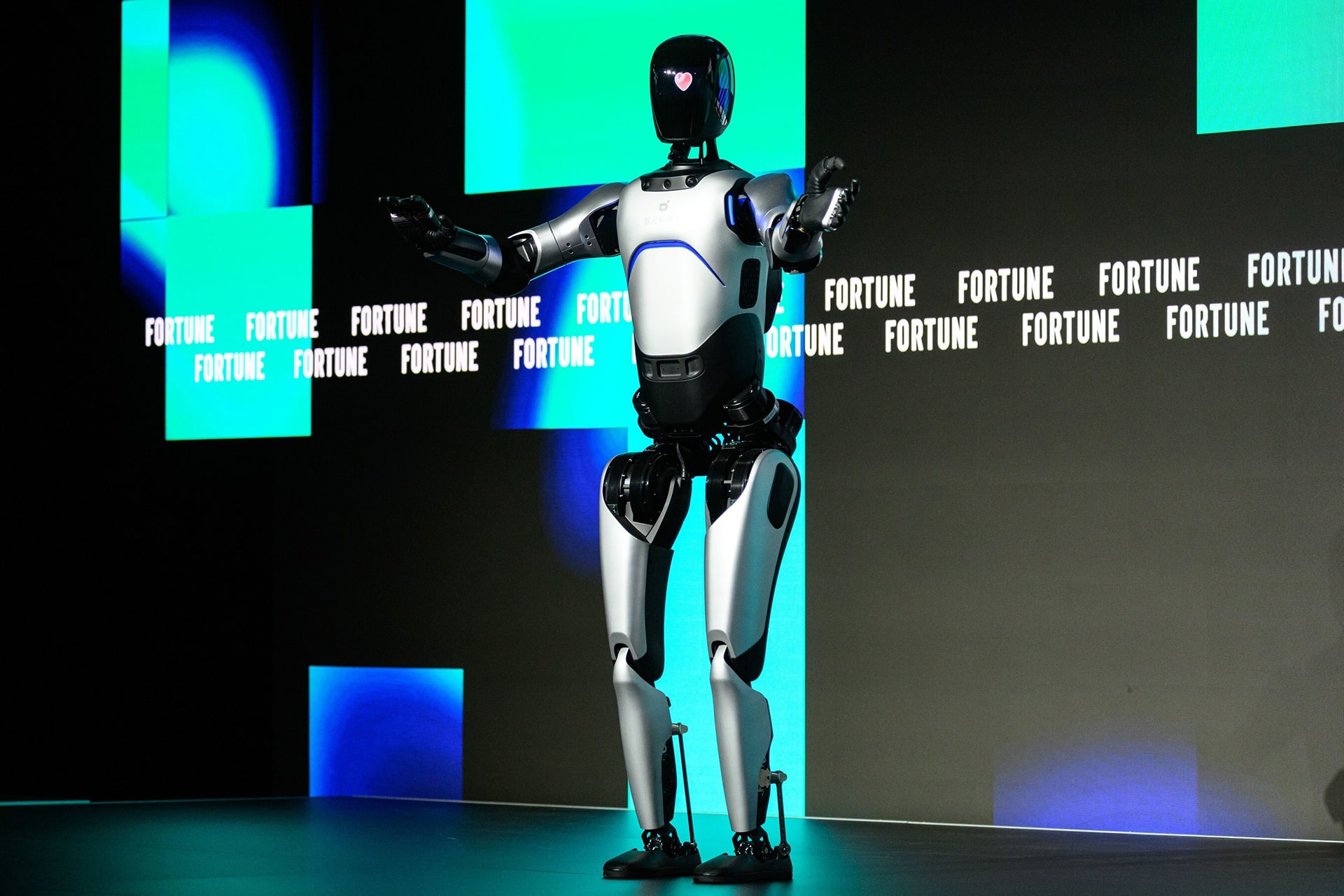
Beijing and Shenzhen are increasingly acting as one integrated 'Robot Valley', a coordinated approach treating two major metropolitan areas as a single continuous testbed, deploying humanoids into shops, restaurants, apartment buildings, and transit hubs to generate the diverse training data embodied-AI models require, according to a Bloomberg feature. The purpose is less near-term revenue than feeding a data flywheel lab simulation alone cannot replicate.
Bloomberg's on-the-ground reporting describes robots learning routine tasks in the wild: sorting deliveries, guiding customers, handling short unscripted interactions. This is a deliberate strategy — deployments are structured to accumulate multimodal experience at a scale no closed lab environment can generate in the same timeframe, because embodied models improve through exposure to messy real-world variation more than through additional simulation.
This is where APAC significance becomes concrete: data now functions as a policy variable in its own right, not just a corporate asset that companies accumulate independently. Cities willing to permit humanoids into shared real-world spaces, even at reduced speed for safety, accumulate a training advantage that pure hardware exporters selling into more restrictive markets cannot replicate, regardless of robot design sophistication.
That changes the competitive calculus for Japan, Korea, and Singapore, all more conservative on public-space robotics rules than Beijing or Shenzhen currently apply. Simulation quality and dataset-sharing partnerships may matter more for these markets than any individual robot's hardware specifications, because embodied models improve fastest wherever real-world deployment is easiest to permit, and permitting speed is itself now a competitive variable governments can control — a lesson Caixin's reporting on the broader Robot Valley funding ecosystem makes explicit.
Our read — calling this a 'Robot Valley' branding exercise misses the point; this is China running the eldercare and hospitality service sector as an unpaid data-labeling workforce for its own AI labs, and the residents mostly do not realize that is the transaction taking place. The signage and defined routes are not just safety theater — they are consent theater, designed to make an experimental data-collection program feel like municipal infrastructure rather than a live research trial involving the public.
By 2027, expect at least a handful of second-tier Chinese cities to formally adopt Beijing and Shenzhen's permissive framework, and expect the first visible export of this approach to be a foreign government — plausibly in the Gulf or Southeast Asia — licensing the operating playbook, signage standards and all, rather than just buying the robots themselves, since the playbook itself is arguably the more valuable and more easily exported asset than the hardware. The cities that move first on this framework will effectively be selling a regulatory template to the rest of the world as much as a technology stack, and that template business could eventually outlast the underlying hardware advantage.
What to watch next is whether other Chinese cities beyond Beijing and Shenzhen formally adopt the same permissive framework within the next year, signaling this is becoming national policy rather than a two-city experiment, and whether any of those cities publish their own version of a data-sharing agreement with local AI labs.
The open risk is a single high-visibility incident — an injury or a viral malfunction video — that triggers public or regulatory pullback before the training-data advantage becomes durable enough to survive a bad news cycle, especially in a media environment where such footage travels well beyond China's own platforms and reaches regulators in markets China would rather not alarm.