What did Genki Robotics show Japan’s prime minister?
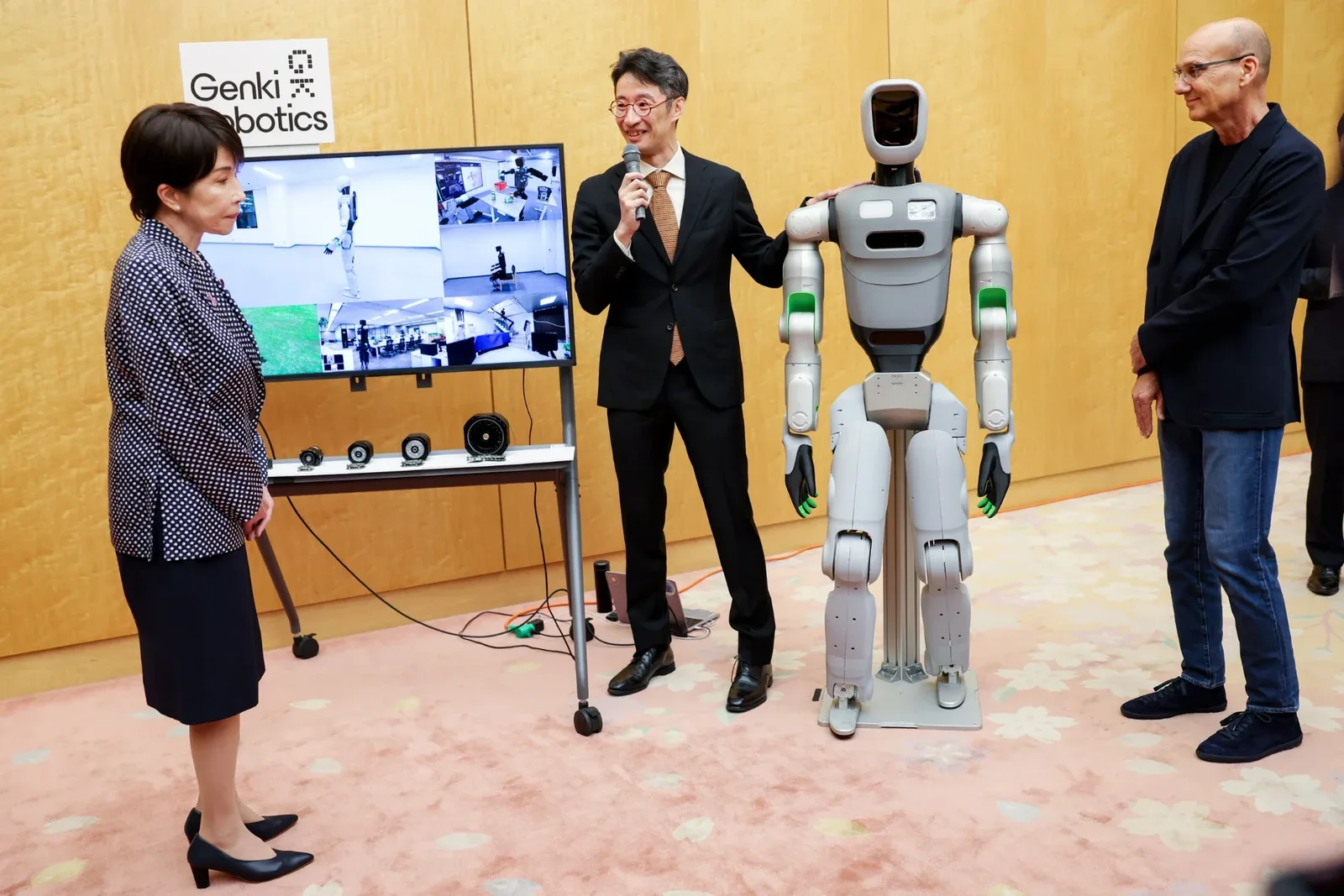
Genki Robotics presented an early humanoid prototype on a support at the prime minister’s office. The demonstration was not a customer trial or a test of production readiness. Sources
A prototype assembled in a weekend
Genki Robotics, the Tokyo startup founded by Android co-creator Andy Rubin, showed its humanoid prototype to Prime Minister Sanae Takaichi at the Prime Minister's Office on November 12. Chief technology officer Koichi Nishiwaki also attended.
According to reports, the parts arrived on a Friday, the robot was assembled over the weekend and it took its first steps on the Monday before the visit. It was shown on a fixed support, and the company plans a product model toward the end of the year.
Funding and government backing
Genki Robotics has raised about $50 million in seed funding, and media have reported a Series A round valuing the company at about $1 billion.
The demonstration fits Takaichi's industrial agenda, which lists physical AI among 17 strategic fields. Japan has set goals of 10 million AI robots by 2040 and a 20 trillion yen related market.
Editorial analysis: Political attention is arriving before the product
Showing a days-old prototype to a prime minister shows how fast Japan wants a domestic humanoid champion. It does not yet show what the robot can do.
Key details, including specifications, target tasks, price and manufacturing partners, are still undisclosed. The year-end product model will be the first real basis for judging Genki against Chinese and US rivals.
Editorial perspective: The useful next demonstration would look less like a ceremony
Assembling a prototype quickly tells us that the team can bring parts together and get motion out of them. A buyer faces a different deadline: when a part is replaced on Tuesday, can the machine return to the same job on Wednesday without its designers standing beside it? A supported appearance at the prime minister’s office was never designed to answer that.
For the next showing, we would trade a wider repertoire of gestures for one modest task with a clear start, finish and reset. Let a prospective operator run it several times, including after a stop, and say what the support is doing. That gives Japan’s potential industrial partners something useful to evaluate before price or national deployment targets enter the conversation.