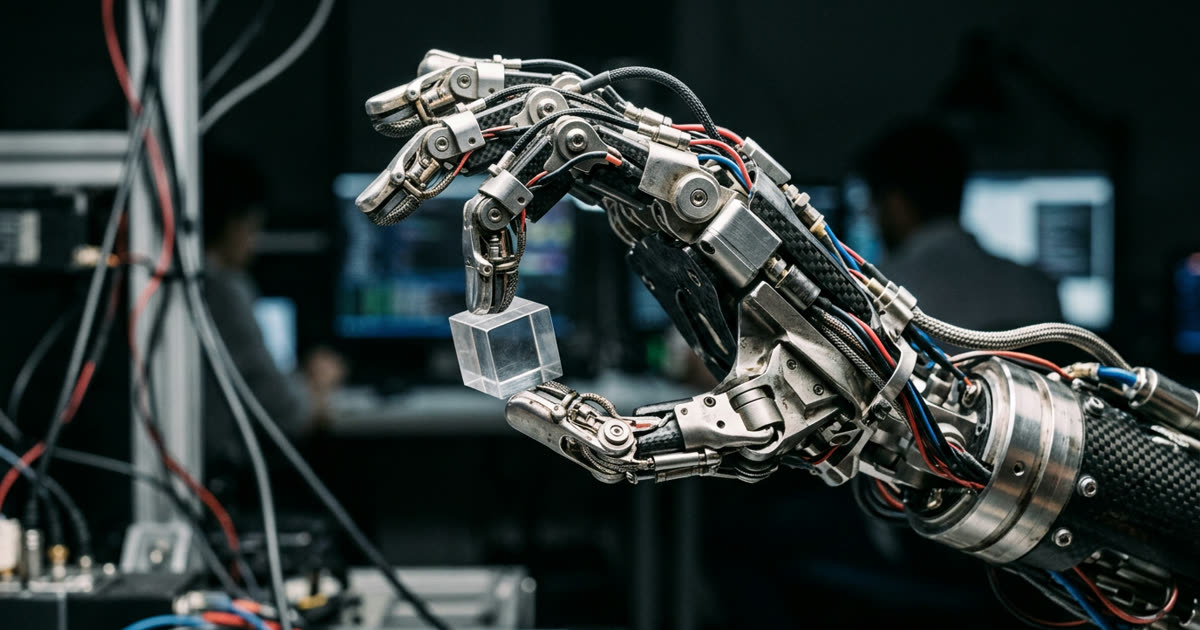
Honda drew significant attention at the Humanoids Summit Tokyo 2026 on May 29, when it publicly revealed an advanced multi-fingered humanoid robotic hand — a high-dexterity end effector designed for manipulation tasks requiring fine motor control. As reported by Humans Alike, the reveal marks Honda's most substantive public humanoid robotics statement since it retired the ASIMO program in 2022, and signals a deliberate strategic re-entry into the field via a components-first approach rather than a full-platform race against established competitors.
The summit, organized by Humanoids Summit, brought together humanoid robot developers, investors, and automotive and electronics OEMs from across Asia and beyond. Honda's (Honda) appearance was closely watched precisely because of the company's historical role — ASIMO was for two decades the world's most recognized humanoid robot — and its subsequent public silence on the humanoid category. Honda's re-emergence at a high-profile venue of this kind is widely interpreted as a signal that internal development work has been ongoing and that the company is prepared to begin commercial engagement.
The Design and Engineering Significance
The multi-fingered hand represents a cable-driven, high-degrees-of-freedom design capable of performing tasks that simpler gripper or two-finger designs cannot accomplish — including pinch grasps, lateral key grips, and multi-object manipulation. Honda has not disclosed the full mechanical specification, but the demonstration showed the hand manipulating small tools, inserting connectors, and folding flexible materials. These are precisely the tasks that have proven most difficult for humanoid robots to perform reliably in unstructured industrial settings. A robust hand solution has significant commercial value both as an integrated component of Honda's own future platform and as a standalone module sold to other humanoid OEMs seeking to improve dexterity.
What Honda's Re-Entry Signals for Japan
Japan's humanoid robotics sector has been observed with a mixture of expectation and concern as Chinese and Korean competitors accelerated their deployment timelines. The presence of Honda — with its engineering pedigree, precision manufacturing infrastructure, and global brand recognition — injects a credible new competitor into Japan's domestic humanoid ecosystem. Honda's components strategy is particularly significant: rather than racing to ship a complete humanoid platform, the company appears to be targeting the supply chain for dexterous manipulation hardware, where it can leverage decades of precision actuation and materials expertise that it developed for engine and transmission components.
The Humanoids Summit Tokyo is becoming an important annual bellwether for the industry in Northeast Asia. Honda's presence and the technical quality of its reveal suggest the company has been developing this capability in relative secrecy for several years, and that a more complete platform disclosure — or a commercial partnership announcement for the hand technology — may follow within 12 to 18 months. For Japan's robotics sector, Honda's return is a significant vote of confidence in the commercial viability of humanoid platforms.