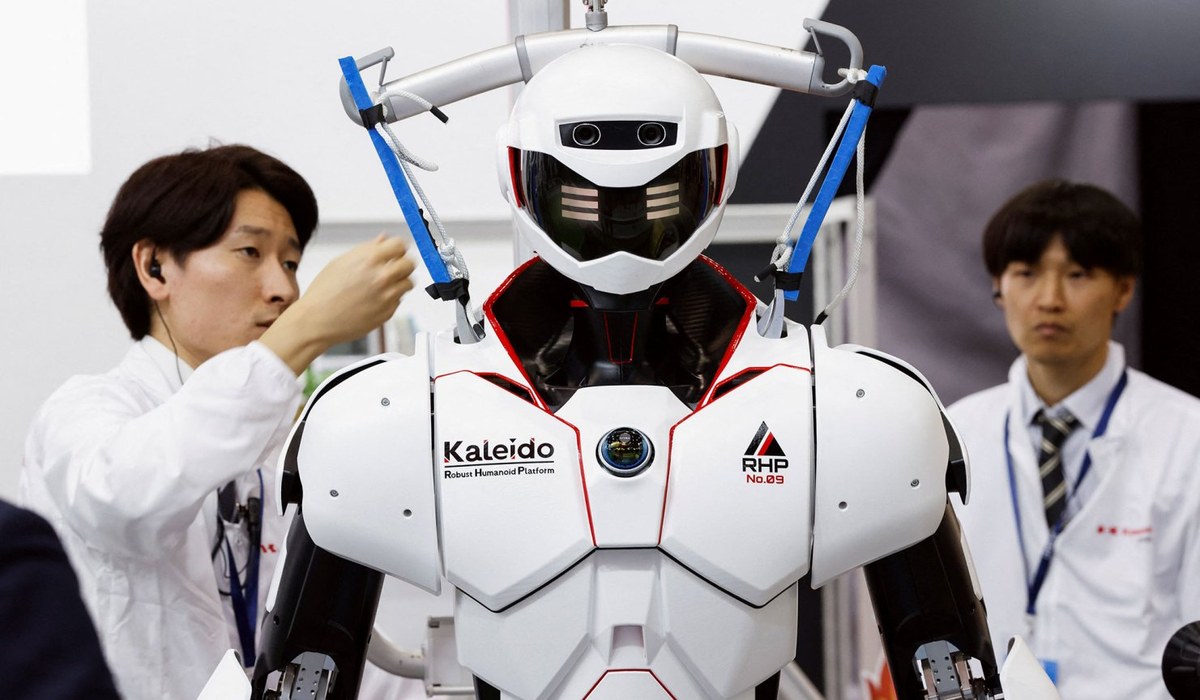
Tokyo Big Sight transformed into one of the most significant crossroads for the global humanoid robotics industry during the three-day AI Expo Tokyo, which ran from April 15 to 17, 2026 as part of the broader NexTech Week TOKYO Spring. With more than 200 exhibitors spanning artificial intelligence, edge computing, and advanced robotics, the event underscored how rapidly the center of gravity in humanoid robot development has shifted — and who is now driving it.
Chinese Makers Dominate the Floor
Among the most closely watched presences were China's AGIBOT, which brought both its A2 and X2 models to the Tokyo exhibition floor. The A2, a full-body humanoid designed for industrial manipulation tasks, demonstrated dexterous assembly operations that drew sustained crowds of engineers and procurement managers. The X2, a more compact form factor optimized for service and interaction environments, highlighted AGIBOT's strategy of serving multiple verticals simultaneously. Fourier Intelligence, another Chinese firm with deep ties to rehabilitation and industrial robotics, displayed its GR3 humanoid — a platform that has become a reference benchmark in the research community for open-source bipedal motion control. The GR3's presence in Tokyo was notable not just for its technical capability, but for what it represented: a Chinese robotics firm confident enough to compete on technical merit in Japan's most prestigious tech venue.
Japan's Industrial Robotics Legacy Meets a New Challenge
For Japanese attendees — many of them from established manufacturers and systems integrators — the expo posed a pointed question about where domestic firms stand. Japan's industrial robotics sector, long dominated by companies such as Fanuc, Yaskawa, and Kawasaki, built its global reputation on precision, reliability, and deep integration with automotive and electronics supply chains. Yet humanoid robots demand a different set of capabilities: adaptive AI, whole-body motion planning, and rapid iteration cycles more akin to consumer electronics development than traditional industrial automation. Several Japanese robotics firms exhibited at NexTech Week, but the conversation on the show floor repeatedly returned to the speed at which Chinese developers were closing gaps that once seemed insurmountable.
From Prototype to Deployment: The Defining Theme
What distinguished AI Expo Tokyo 2026 from previous editions was the unmistakable shift in commercial intent. Exhibitors were not showcasing robots as research curiosities or five-year visions — they were presenting deployment roadmaps, integration partnerships, and in some cases, delivery timelines measured in quarters rather than years. Conversations around cost per unit, maintenance contracts, and training data pipelines replaced the more academic debates that characterized industry gatherings just two years ago. This transition from R&D theater to procurement reality represents a structural inflection point for the humanoid market across Asia.
APAC as the Proving Ground
Tokyo's role as host is itself significant. Japan remains a bellwether for industrial technology adoption in APAC, and its manufacturers are among the most demanding evaluators of robotic systems globally. That Chinese humanoid firms chose to display at NexTech Week — rather than staying within their domestic comfort zone — reflects a growing confidence that their products can withstand scrutiny in the world's most technically rigorous markets. For the broader APAC ecosystem, the message from April's AI Expo Tokyo was clear: the humanoid robot era has moved decisively from aspiration to implementation, and the competitive dynamics are being set right now.