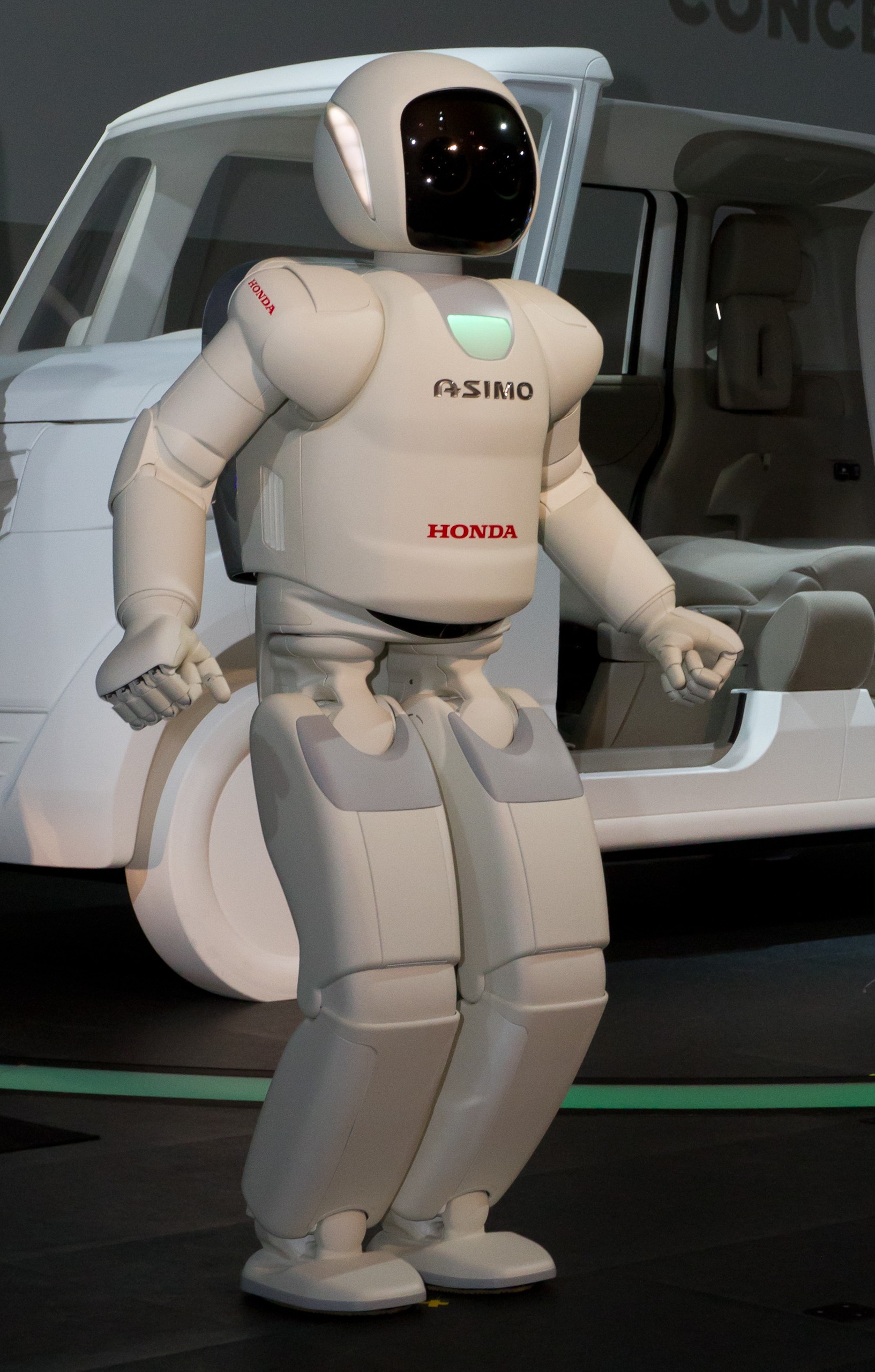
Japan's longest-running humanoid project has finally found its commercial purpose. Honda Motor Co. announced in April 2026 that it is establishing a dedicated robotics division — separate from its core automotive operations — charged with turning four decades of bipedal research into deployable industrial machines. The clock is already ticking: Chinese rivals are shipping units by the tens of thousands while Honda is still drawing up org charts.
Retiring the Museum Piece
ASIMO was engineering theatre at its finest — a 130-centimetre marvel that climbed stairs, poured drinks, and appeared in glossy magazines, yet never set foot on a factory floor as an economic contributor. Honda retired it in 2022 after concluding that the programme's objectives had drifted too far from commercial reality. What followed was a quieter, more consequential four years of restructuring: shifting robotics engineers from research labs toward product teams, and asking an unfamiliar question — what does a customer actually need from a bipedal machine?
The answer is now codified in a three-platform roadmap overseen by Dr. Kenji Matsumoto, who previously ran Honda's advanced mobility research laboratory in Wako. The first model targets logistics applications and is slated for commercial release in late 2026. A manufacturing-grade variant follows in 2027, with a general-purpose platform completing the sequence in 2028. Each builds on Honda's foundational locomotion research but strips away the performance demonstrations that made ASIMO famous in favour of the reliability metrics that industrial buyers actually purchase against.
A Labour Crisis and a Competitive Shock
Two forces conspired to accelerate Honda's decision. The first is demographic: Japan's unemployment rate sits below 2.5%, a third of the population has passed sixty, and the manufacturing sector faces a chronic deficit of able-bodied workers that no immigration policy has meaningfully addressed. METI responded by committing ¥500 billion over five years to industrial robotics deployment — a signal to major manufacturers that government procurement and subsidy support would follow credible commercial offerings.
The second force is competitive alarm. AGIBOT shipped its 10,000th unit in March 2026; Unitree delivered more than 5,500 robots across 2025; UBTECH celebrated its Walker S2's 1,000th delivery in December of the same year. These numbers circulated through Japanese boardrooms like a warning. Honda possesses brand trust among domestic industrial buyers that no Chinese startup can easily replicate — but trust alone does not win purchase orders. Delivering hardware at scale, at a price that pencils, is the only currency that matters now.
Building the Stack from Partners
Honda cannot build a competitive humanoid division alone within a three-year window, and it is not pretending otherwise. The company has struck a co-development agreement with Fanuc — Japan's preeminent industrial robotics manufacturer — to engineer actuator systems tuned for production environments rather than exhibition halls. That partnership gives Honda something Chinese startups spent years building internally: access to a supply chain already operating at automotive-grade tolerances and volumes. A separate agreement with SoftBank will embed SoftBank's enterprise AI platform as the language layer through which operators instruct Honda's robots — sidestepping the need to build a proprietary large language model from scratch.
Honda's own production facilities in Saitama, Kumamoto, and Suzuka serve double duty: they are both the initial deployment environments and the test beds where the division will iterate. Operating its robots inside Honda's own factories before offering them externally is a deliberate strategy — it generates real-world reliability data under conditions that Honda controls, and it means the first external sales pitch comes backed by quantified performance rather than speculative projections.
Rebalancing the APAC Landscape
Honda's entry reshapes the APAC competitive picture in ways that unit counts alone do not capture. The humanoid market in the region has been, until now, a story of Chinese scale and government subsidy — effective but politically complicated for buyers in Japan, South Korea, Australia, and India who prefer supply chains they can trust with sensitive production data. Honda's combination of sovereign credibility, financial depth, and engineering heritage creates a genuine alternative pole of gravity. The critical question is execution speed. Honda has historically been a deliberate mover; the humanoid race rewards companies that ship imperfect products and improve them in the field. The next eighteen months will reveal whether Honda's new division inherited its parent's discipline or its urgency.