At a glance
Unitree launched the G1+, adding neck movement, stronger claimed motor torque and expanded sensing, according to Humanoids Daily. Its listed base price is $15,000 before tax and shipping, while battery runtime remains about two hours and the performance figures are manufacturer claims, not independent measurements Humanoids Daily.
Unitree G1+ launch: listed specifications and price
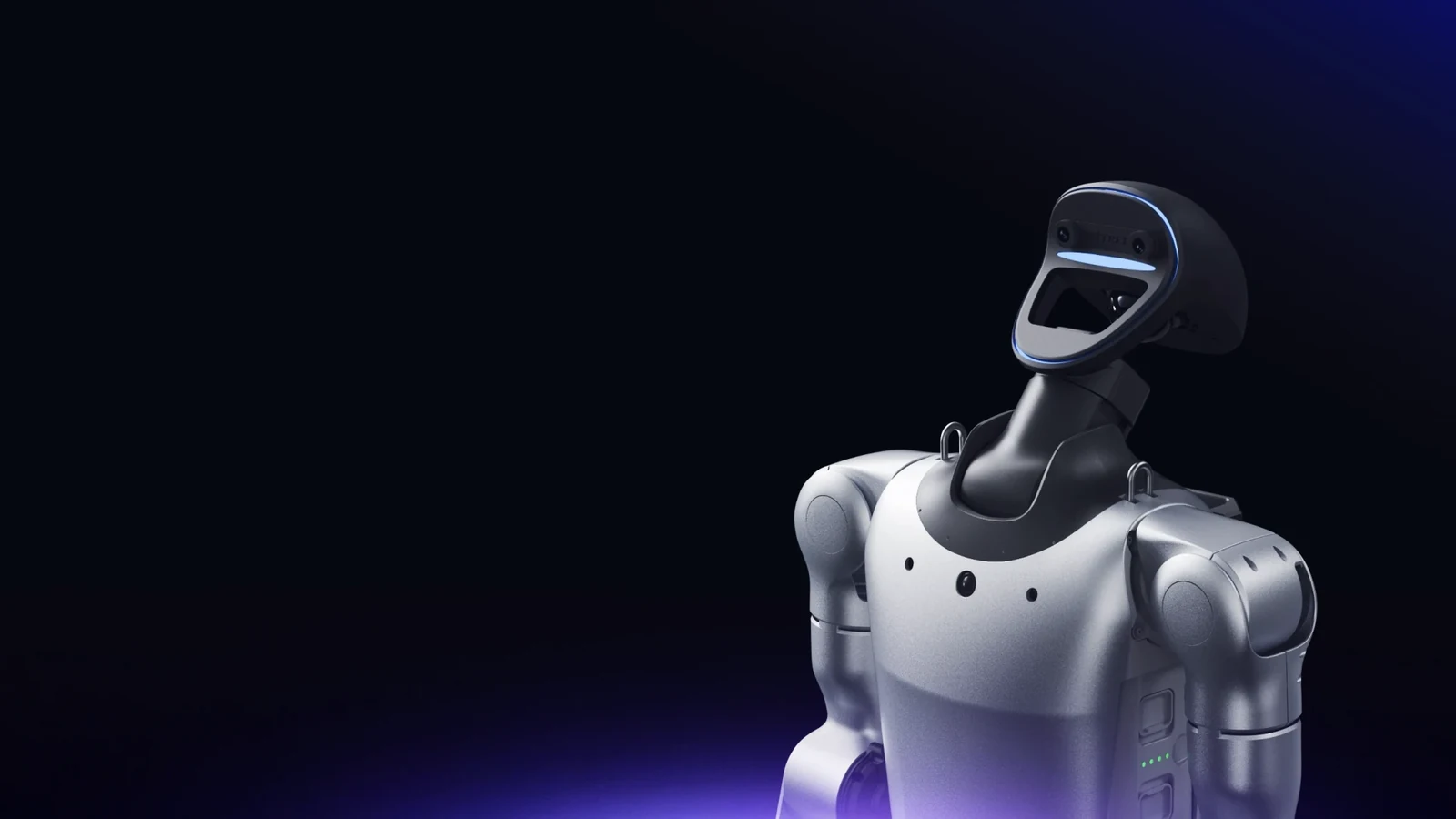
Unitree has launched the G1+, an upgraded version of its compact humanoid, according to Humanoids Daily Humanoids Daily. The product account describes two added degrees of freedom in the neck, allowing pitch and yaw Humanoids Daily.
The listed base-model specifications remain a 1.34-metre height, about 35-kilogram weight and 25 degrees of freedom Humanoids Daily. Unitree’s product page lists the base G1+ at $15,000 before tax and shipping, while an EDU version is listed with 25 to 45 degrees of freedom depending on configuration and pricing by enquiry Humanoids Daily.
Neck articulation, motor claims and onboard sensing
Unitree claims 110% higher peak torque at the shoulder and waist and a 43% increase in maximum arm torque for the G1+ G1+’s neck and motor revisions. The company also reports reduced heating at equal torque for shoulder and waist, arm and thigh motors, but the announcement does not supply independent test results in the account Humanoids Daily.
The listed sensing package includes binocular vision, a chest-mounted wide-angle camera, head touch sensing, six microphones and two speakers G1+’s expanded sensing package. These additions and the moving neck could be relevant to developers assessing head movement, visual coverage or interaction inputs, but the feature list alone does not demonstrate reliable perception, task performance or autonomous operation.
Editorial analysis: practical APAC evaluation questions
For APAC research teams, integrators and prospective buyers, the launch is best read as a set of specification changes to evaluate against a defined task, rather than as proof of a general step-change in capability. The practical question is whether neck pitch and yaw, added sensors or the stated motor revisions solve a particular workflow constraint, and whether the required configuration is the base model or an EDU option.
Buyers should ask for comparable test conditions, continuous as well as peak torque data, thermal results over representative duty cycles, and clear definitions of the reported arm-load figure. They should also establish what software, calibration, support and integration work are included in the quoted configuration and price; these are procurement questions, not claims that such services are or are not available.
Limits and what to verify next
Humanoids Daily lists the G1+ maximum arm load at about 3 kilograms, compared with about 2 kilograms for the G1, and cautions that higher peak torque should not be read as an equivalent increase in the whole robot’s lifting capacity the listed arm-load comparison. The account also says battery runtime remains about two hours for both models; external power can extend operation while connected, but does not increase untethered battery endurance Humanoids Daily.
Before drawing conclusions, evaluators should verify the final configuration, the measurement methods behind torque and heating claims, the conditions for the arm-load figure, and the runtime under their intended workload. The announcement does not disclose those details in the reported account, and neither a specification sheet nor a demonstration establishes reliability over time or autonomous task completion.
Sources and reporting notes
Humanoids Daily reports on Unitree’s product announcement and lists product-page pricing. The torque, heating, sensing and other specifications are manufacturer claims; this report does not treat them as independently verified performance.
Original synthesis and analysis of the linked public reporting. AI-assisted drafting and translation; reported claims remain attributed to their sources.