At a glance
Wandercraft said on September 4, 2026, that it had secured 12 customers for Calvin-40, its industrial humanoid. The company announcement does not name them or report measured deployment performance. Wandercraft
Wandercraft’s 12-customer claim is a commercial signal, not a deployment tally
Wandercraft said on September 4, 2026, that it had secured 12 customers for Calvin-40, its industrial humanoid, describing them as large organizations across automotive, logistics, retail, healthcare and defense. Wandercraft’s Calvin-40 customer announcement does not name the organizations or specify whether each engagement is a purchase, pilot, contract or another arrangement.
That makes the number a commercial signal, not a public account of installed robots or completed deployments: customer status alone cannot establish how many machines are operating, where they are working or whether relationships have advanced beyond evaluation. For readers assessing the announcement, the central distinction is between a customer count and verifiable use in production; the release offers the former but no engagement-by-engagement detail. Wandercraft
Calvin-40 targets strenuous handling and task-by-task capability growth
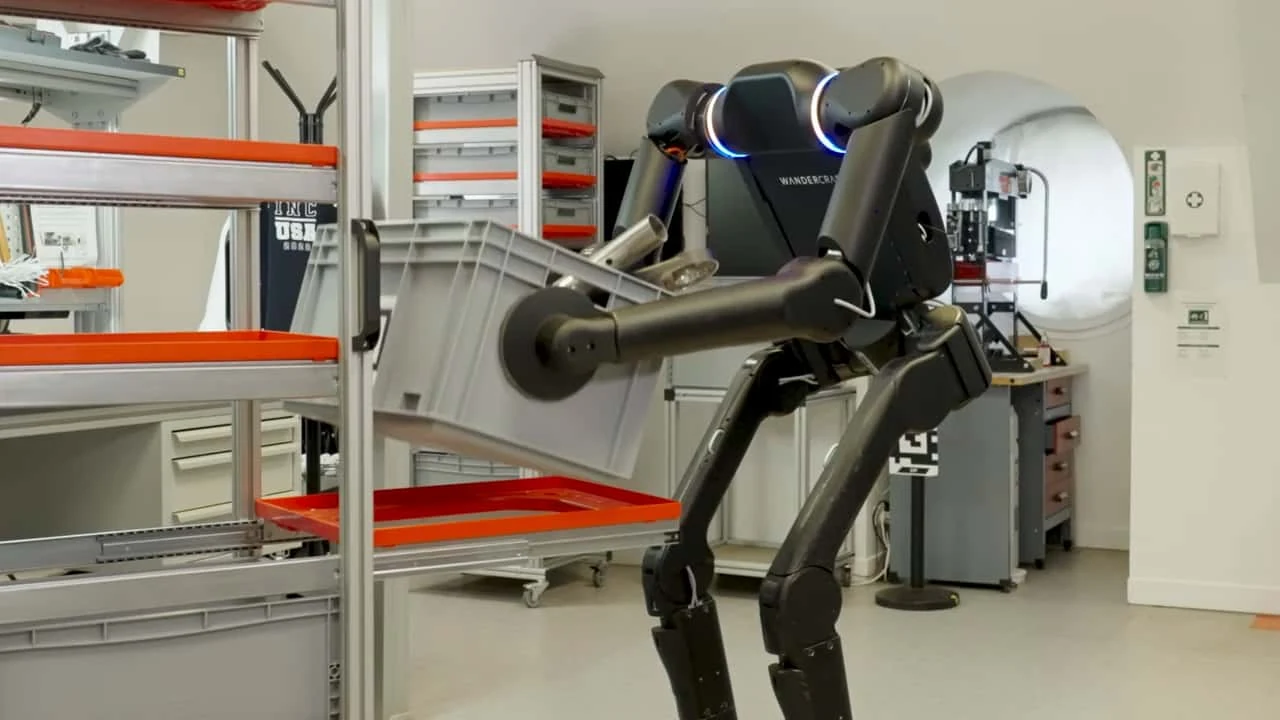
The company says Calvin-40 is being developed for physically demanding handling of boxes, parcels, tires, panels, carts and other materials, with work beginning in material handling and expanding toward picking and sorting. Wandercraft’s account of Calvin-40’s intended tasks describes a focused starting point rather than a claim that the robot already performs this full range in routine operations.
Wandercraft frames its method as establishing reliability in defined task clusters and then broadening capabilities with data from deployments; it also says it retains control of operational data and its development path. The company links this approach to its experience with self-balancing rehabilitation and personal exoskeletons. Wandercraft
Editorial analysis: APAC buyers should evaluate task fit before humanoid breadth
For APAC operators, the practical lesson is to assess a proposed humanoid against a narrow, measurable job rather than a broad promise to reproduce human abilities. Buyers can first specify the objects, locations, handling steps, cycle conditions and safety boundaries that matter in their own facilities, then ask how an evaluation would test each requirement.
Wandercraft says it is working with Renault Group on manufacturing, engineering, procurement and design-to-cost, and says Renault plans to deploy 350 humanoid robots in the next 18 months. The Renault deployment plan reported by Wandercraft is a plan, not a completed rollout; APAC procurement teams should ask what counts as deployment, which tasks and sites are included, and how progress will be measured.
What the announcement leaves unverified
Wandercraft identifies safety, heavy payloads, reliability, success rate and uptime as requirements for Calvin-40’s intended industrial environments, but the announcement does not disclose measured results for those measures in Calvin-40 deployments. The announcement’s Calvin-40 performance claims therefore describe requirements and development priorities, not demonstrated operating outcomes.
The next useful evidence would clarify the status of each customer engagement and report task-level results under stated conditions, including payload, intervention frequency, safety incidents, task success and uptime. Buyers should also verify how operational data is handled and what evidence supports any claimed expansion from material handling into picking and sorting; the announcement gives no customer-by-customer account or measured task results. Wandercraft
Sources and reporting notes
Based on a Wandercraft company announcement, not an independent media account. The customer count and Renault plan are company-reported, and the announcement provides no independently verified deployment or performance results.
Original synthesis and analysis of the linked public reporting. AI-assisted drafting and translation; reported claims remain attributed to their sources.