Unitree Robotics
Best price-to-performance bipedal locomotion on the market — with a global developer community exceeding 50,000 members.
Democratising humanoid robotics — from research labs to factory floors.
Founded in Hangzhou in 2016, Unitree Robotics built its reputation on quadruped platforms — its Go1 and Go2 dogs became the most widely deployed research quadrupeds globally. That same engineering philosophy, prioritising price-performance ratio above all else, transferred directly into its humanoid programme. When the G1 launched at under $16,000, it redrew the entry point for the entire industry: suddenly universities, startups, and small manufacturers could field a full-size bipedal platform without a seven-figure budget.
By Q1 2026, Unitree had shipped approximately 4,000 humanoid units — the second-largest volume globally after AGIBOT — primarily to research institutions, AI labs, and developer organisations rather than production lines. The company's open SDK approach has cultivated a community of over 50,000 developers worldwide who build applications, fine-tune locomotion algorithms, and contribute to the broader humanoid software ecosystem. This network effect creates a compounding competitive moat that pure hardware metrics do not capture.
The H1's world record running speed of 3.3 m/s at launch — later targeted at 5 m/s in the H1-2 — demonstrated that Unitree's low cost does not imply low capability. The H1-2's 21 kg peak arm payload and compatibility with the Dex5-1 dexterous hand system bring Unitree into serious industrial territory. The company is now expanding its manufacturing capacity in Hangzhou to meet rising demand from ASEAN markets and European research institutions.
Humanoid Robot Models
The world's most affordable full-size humanoid robot, the G1 Standard made bipedal robotics accessible to organisations that previously could not justify the capital cost. Armed with 3D LiDAR, depth cameras, and an 8-core CPU, it provides a capable research and light-deployment platform. The price point has made it the dominant choice for university robotics labs across Asia, Europe, and North America.
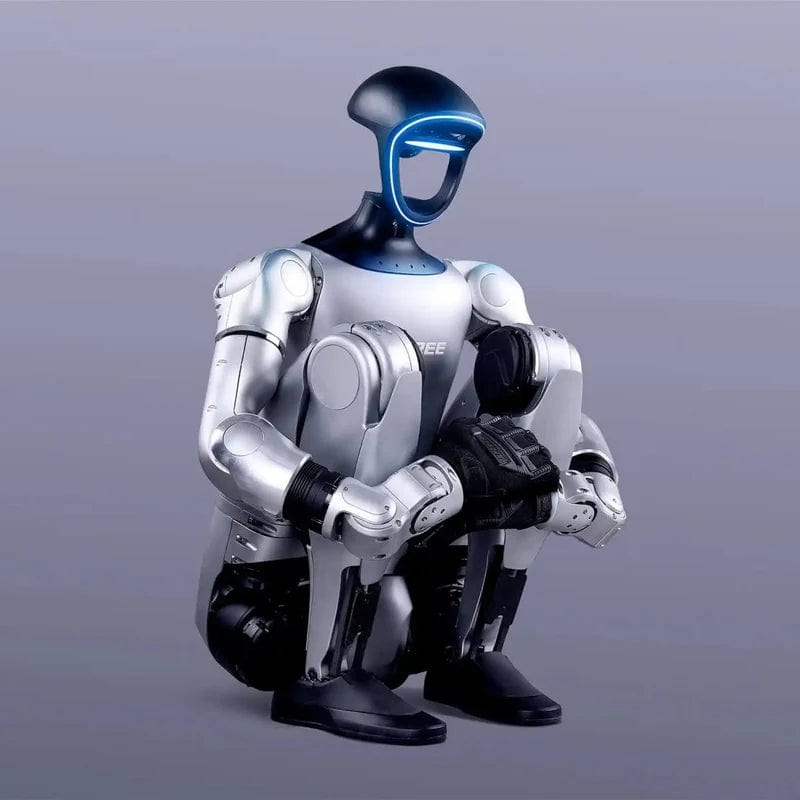
The research-optimised variant of the G1, with 43 DOF — 20 more than the Standard — and optional NVIDIA Jetson Orin onboard compute. The Dex3-1 dexterous hand system adds 7-9 DOF per hand, enabling manipulation tasks that the Standard cannot attempt. Full SDK access makes it the platform of choice for AI and manipulation research teams worldwide.
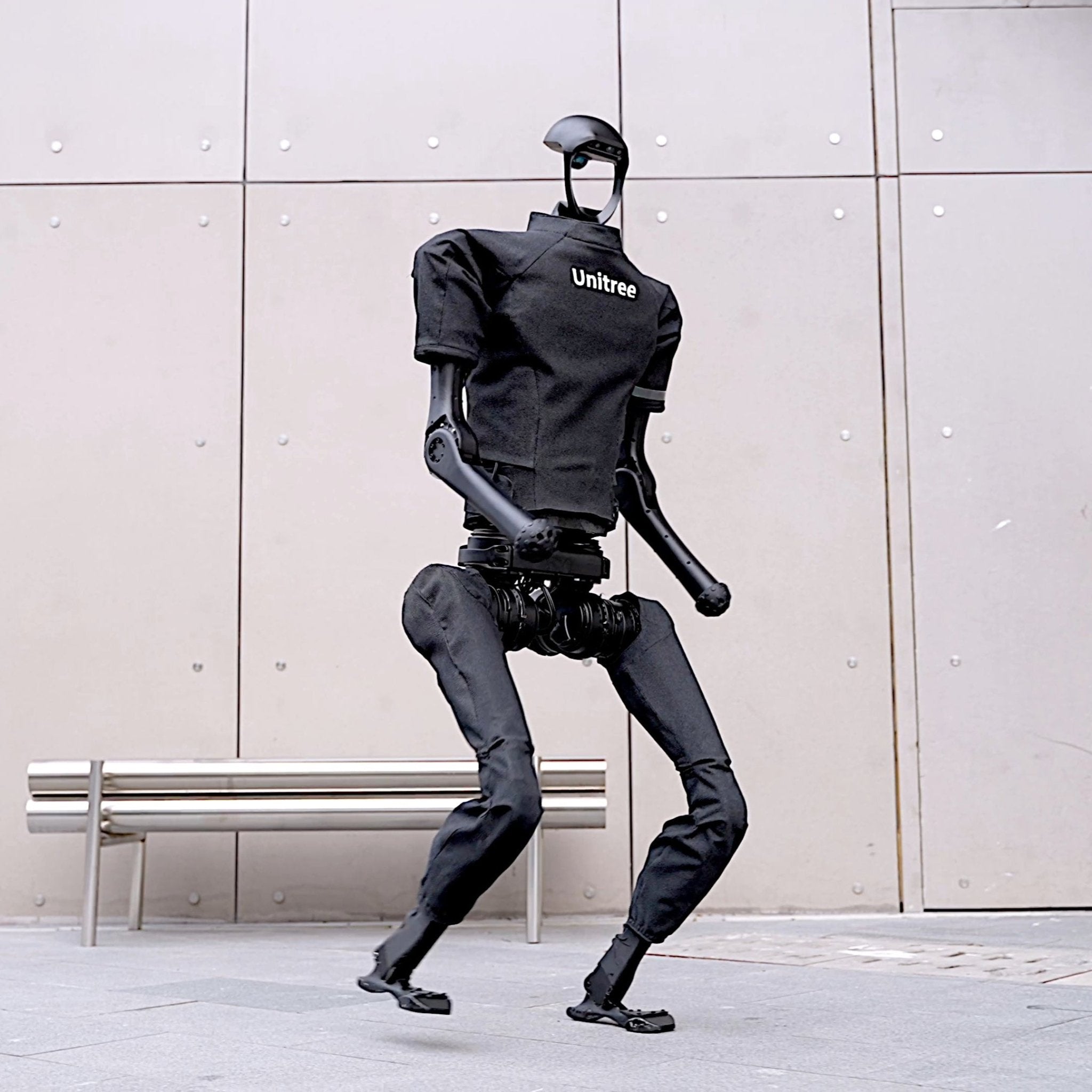
Unitree's full-size industrial locomotion platform, the H1 set a world record running speed of 3.3 m/s at its launch. Powered by Intel i5/i7 and a 864 Wh quick-swap battery, it is designed for industrial locomotion research where physical robustness and high-speed movement take precedence over dexterous manipulation. The quick-swap battery system enables near-continuous operation in deployment scenarios.
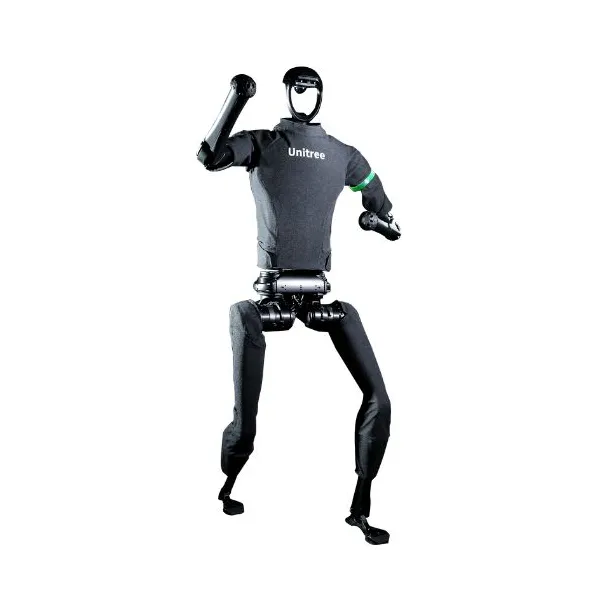
The industrial upgrade to the H1, the H1-2 adds a 7-DOF arm configuration, a peak arm payload of 21 kg, and compatibility with the Dex5-1 dexterous hand system — bringing Unitree's platform into serious factory-floor territory. Targeting 5 m/s mobility potential and enhanced upper-body capability, the H1-2 bridges the gap between research locomotion and practical industrial deployment.
Is this your company?
Keep your Unitree Robotics profile accurate and up to date for the APAC humanoid community.
Claim or Update This ListingList your brand for free →