Asia-Pacific · Analysis
Humanoid Robot Trends for 2027: Seven Shifts to Watch
Humanoid production expanded in 2026, but shipments are not the same as proven, productive deployments. Our 2027 outlook asks whether more robots can deliver reliable, paid work. Here are seven trends that will shape the industry next year, and what they mean for Asia-Pacific.
5 min read
From production numbers to proof of value
The past year delivered remarkable numbers: tens of thousands of humanoids shipped in the first half of 2026 alone, a successful stock market debut for Unitree, a sharp fall in robot prices and new factories across Asia. Long-term shipment forecasts remain far apart and depend heavily on definitions and adoption assumptions. But the conversation is shifting from how many robots can be built to how much useful work they can do. These seven shifts are our editorial outlook for 2027, not guaranteed outcomes.
Commercial launches move from preview to delivery
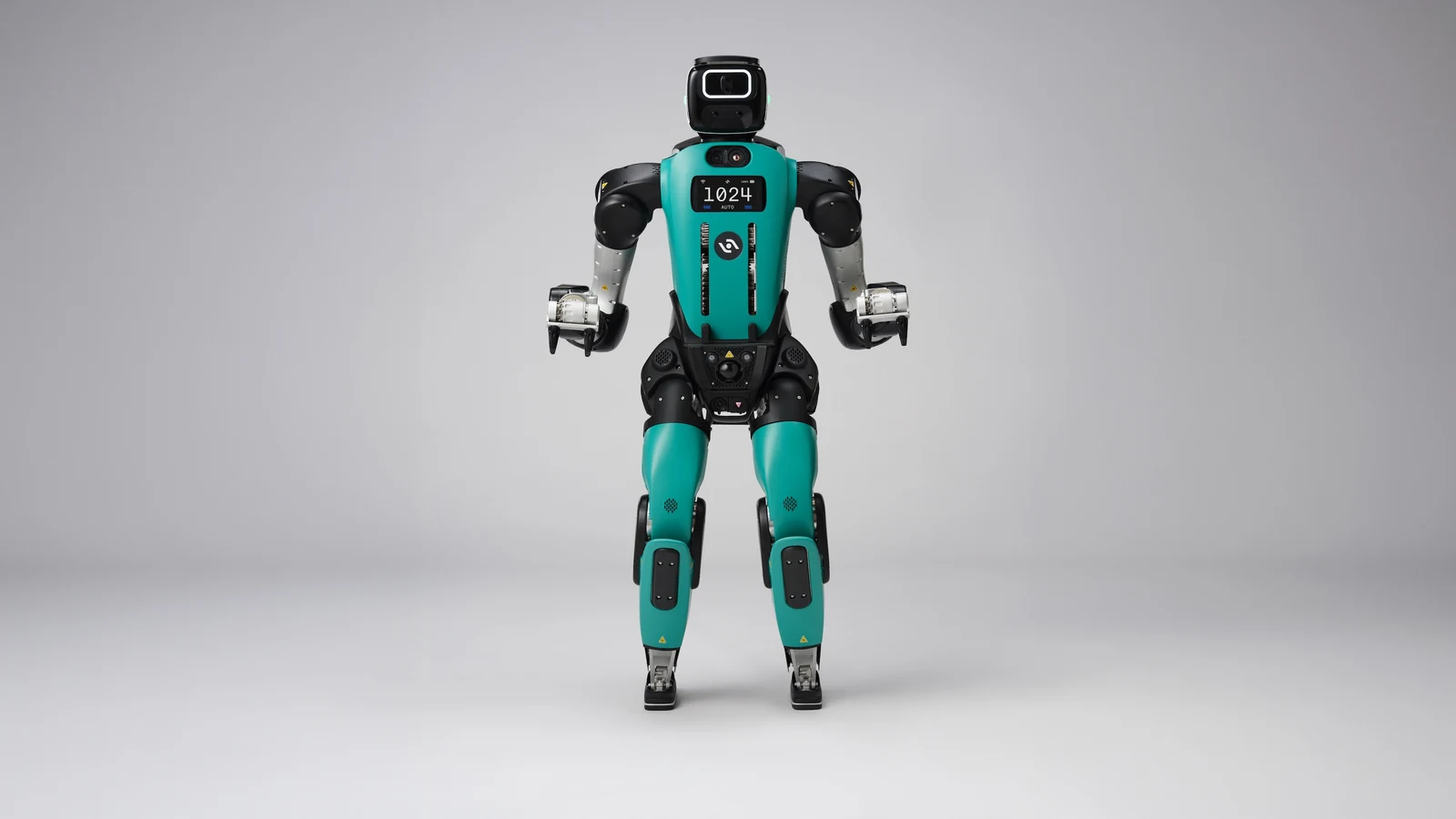
Several manufacturers intend to turn their 2026 announcements into deliveries in 2027, subject to development and deployment delays. Agility Robotics plans early access to Digit 5 in the first half of 2027 and general availability by the end of the year. Tesla is targeting sales of Optimus to outside customers in 2027 after ramping up production at Fremont, although its robots still struggle with general tasks. 1X expects its home humanoid production capacity to grow beyond 100,000 units a year by the end of 2027. OpenAI's CEO has said the company will build a humanoid and expects to show a demonstration in 2027. Expect a year of launches, along with some delays.
Dexterous hands and edge AI become the main battleground
Walking and balance have improved, but dependable movement across crowded or uneven environments remains difficult. Dexterous manipulation and on-board decision-making are becoming equally important tests. Industry analysts expect edge AI computing and dexterous manipulation to decide which robots pass commercial tests in 2027. Watch for tactile sensors, robot hands with 20 or more degrees of freedom, and powerful on-board computers that let robots react without depending on the cloud.
Real-world operating data becomes a competitive asset
Robots learn from experience, and good real-world data is scarce. That explains why Chinese companies are cutting prices to put more robots into the field, why data-collection centres have bought large numbers of humanoids, and why foundation-model developers are partnering with robot makers. In 2027, the companies with the largest fleets in real operations, and the best ways to learn from them, will gain an advantage that is hard to copy.
Regional strategies diverge
China looks well placed to remain a volume leader, supported by manufacturing scale and policy goals such as Shanghai's target of 100,000 factory humanoids by 2030. These are targets, not installed-fleet counts. Japan will expand trials in care, retail and hospitals as part of its plan for 10 million AI robots by 2040. Korea's alliance of industry, universities and government will work towards a domestic robot foundation model and humanoids in its car plants and shipyards. Meanwhile, US restrictions targeting new Chinese humanoid models will push American companies to focus on safety, high-value tasks and domestic supply chains.
Safety and security rules catch up
After the Hugging Face incident and other AI agent breaches in 2026, governments are paying attention to AI that acts in the real world. Expect progress on ISO 25785-1, the first international safety standard for humanoid-type industrial robots; more national guidance, such as Korea's AI security guidelines for autonomous systems; and incident-reporting expectations led by countries like Singapore and Australia. Buyers will increasingly ask vendors to prove safety, cybersecurity and data protection, not just performance.
New business models lower the barrier
Few companies want to pay full price for a technology that is still improving. Robots-as-a-service, monthly subscriptions, daily rentals and shared fleets will spread in 2027, as will insurance products for robot deployments, which Japanese insurers have already begun to offer. Home robot subscriptions and remote "expert" support will make early household adoption easier, while daily rental prices in China have already fallen sharply.
A sharper focus on workers
As humanoids join workplaces, attention will turn to the people around them. Companies will need to retrain staff as robot supervisors, trainers and maintainers, and to reassure employees about safety and job security. Experiments such as a Japanese company planning to "hire" a humanoid as a named team member in April 2027 show how organisations are rethinking teams. The most successful deployments will treat humanoids as tools that take on dull, dirty and dangerous work, not as a quick way to cut headcount.
What to watch in 2027
- Verified deployment data: uptime, success rates and interventions from live sites, not just demo videos.
- Price per useful hour, not just price per robot.
- The first large orders, of hundreds or thousands of units, for specific industrial tasks.
- The progress of safety standards and how insurers price risk.
- Consolidation, as investors back leaders and smaller makers merge or exit.
For Asia-Pacific businesses, 2027 is the year to move from watching to doing: run focused pilots, collect data, build skills and choose partners carefully. The humanoid era will not arrive all at once, but the companies that learn early will be ready when it does.