At a glance
Boston Dynamics announced an Atlas training center at Hyundai Motor Group Metaplant America in Georgia on September 21, 2026 Boston Dynamics. Its first phase is operational, but the announcement describes training and testing, not routine production deployment Boston Dynamics.
Boston Dynamics Opens RMAC at Hyundai's Georgia Metaplant
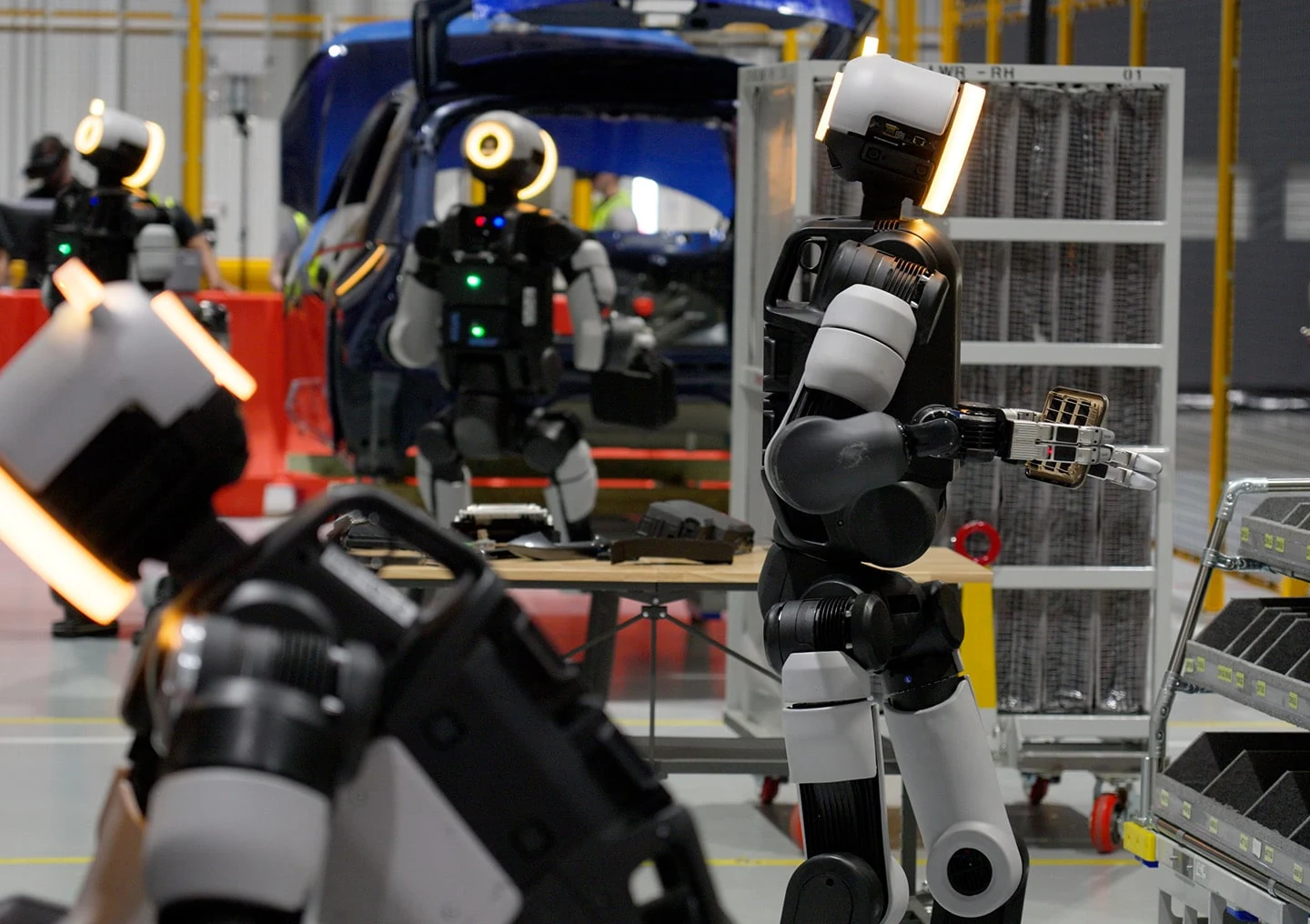
Boston Dynamics announced the Robotics Metaplant Application Center, or RMAC, at Hyundai Motor Group Metaplant America near Savannah, Georgia, on September 21, 2026; the company said the center's first phase was already operational RMAC training center. The facility is presented as a testbed for preparing and integrating Atlas robots into Hyundai Motor Group manufacturing operations, rather than as confirmation that the robots have entered routine production work Boston Dynamics.
Boston Dynamics says Atlas is being trained in real manufacturing environments at the center Atlas training. The company plans to move the operation to a new Hyundai Motor Group Metaplant America building in 2027, described as about ten times the size of the current facility, and says it plans to explore applications in other industries that year Boston Dynamics.
From Parts Sequencing Toward Possible Component Assembly
One task described in the announcement is preparing automotive parts through logistics and sequencing, then placing them in the order needed for assembly automotive parts sequencing. Boston Dynamics says it plans to extend applications to component assembly by 2030, and says Atlas may also take on additional repetitive or strenuous work, including lifting heavy loads Boston Dynamics.
The company also says it is discussing data collection and other Atlas training tasks with existing Spot and Stretch customers customer training discussions. It names manufacturing, aerospace, semiconductors, logistics, food and beverage, and life sciences as sectors represented in those discussions, while describing broader industry work as exploration rather than confirmed deployments Boston Dynamics.
Editorial Analysis: What APAC Manufacturers Should Test Before Adoption
For APAC manufacturers, the practical point is not to treat a dedicated training site as proof that a humanoid is ready for a plant-wide role. The more useful question is whether a narrowly defined task, such as presenting parts in a required sequence, can be evaluated against the site's existing material-handling process. That framing makes the announcement relevant to production engineering without assuming that a US test environment transfers directly to factories elsewhere.
Before considering a similar trial, operators should ask how success will be measured: task completion and error rates, recovery after a part or process variation, and the level of human supervision required. They should also establish what data can be collected, who can access it, and how training changes will be validated before any broader use. These are due-diligence questions, not claims about capabilities demonstrated at RMAC.
Limits of the Announcement and What to Verify Next
The announcement does not disclose quantified task performance, operating hours, uptime, error rates, workforce impact, safety results, or the extent of human intervention during the described work Boston Dynamics. It identifies a training and testing center and planned future applications; it does not say Atlas has begun routine production work at the site Boston Dynamics.
The 2027 building move, expansion to component assembly by 2030, and exploration of other sectors remain company plans, not completed deployments Boston Dynamics. The next useful checks are whether the planned move occurs, what tasks are actually evaluated at the larger site, and whether the company later reports measurable results, operating conditions, and the safeguards used alongside people.
Sources and reporting notes
Based on a Boston Dynamics company announcement, not independent reporting. Operational details and performance claims have not been independently verified.
Original synthesis and analysis of the linked public reporting. AI-assisted drafting and translation; reported claims remain attributed to their sources.