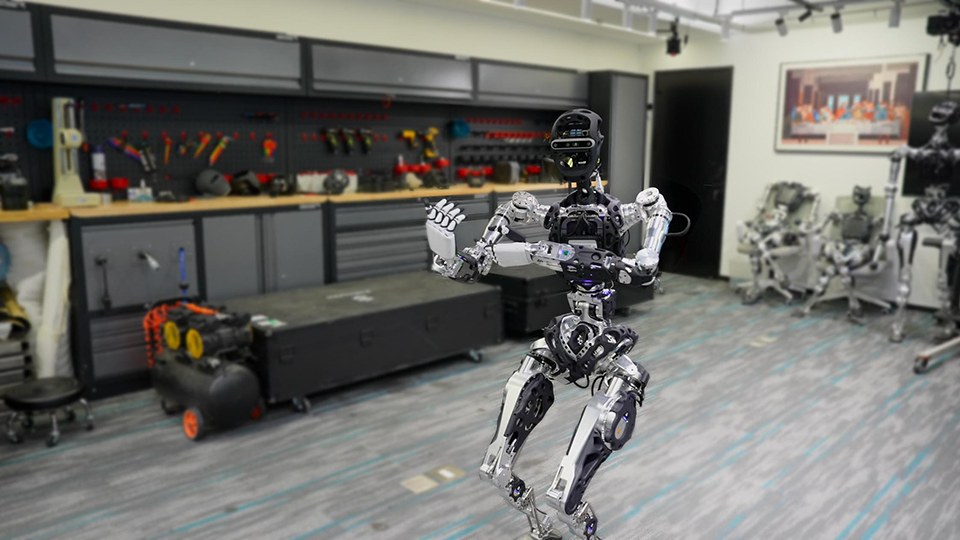
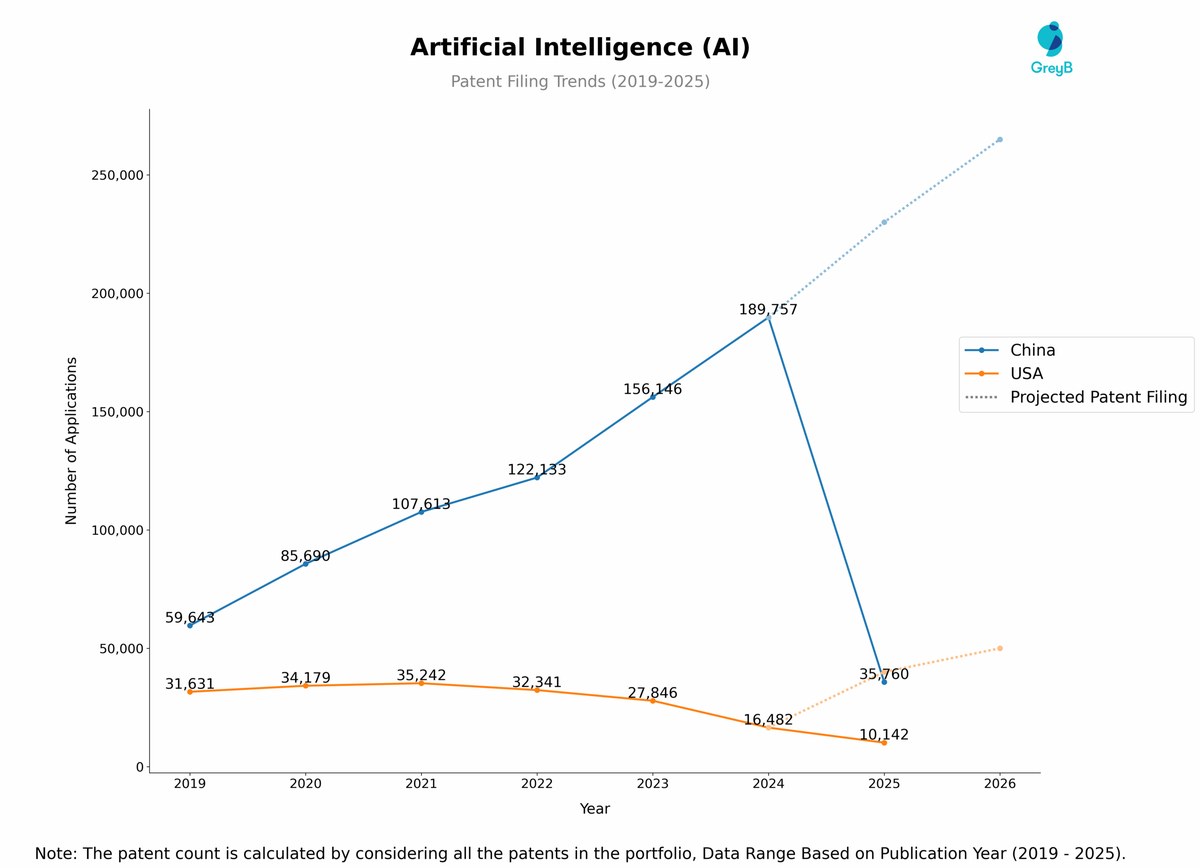
Patent filings are rarely as exciting as robot backflips. But they are the mechanism by which today's engineering choices become tomorrow's licensing revenue — and on that scoreboard, the contest for humanoid robot intellectual property is already heavily tilted toward China.
Morgan Stanley's Robot Almanac, Volume 3: Humanoids and Industrial Robots (December 2025) reports that China filed 7,705 humanoid robot patents over the past five years — compared to 1,561 in the United States, 1,102 in Japan, and approximately 1,100 via WIPO international filings. China's total is nearly five times the US figure, and the gap has been widening, not closing.
UBTECH: The World's Most Prolific Humanoid Patent Holder
At the company level, UBTECH Robotics claims the global number-one position in humanoid patents, with 2,985 patents granted by year-end 2025. This represents roughly 39% of China's entire five-year total from a single company — an unusually concentrated patent portfolio. More broadly, China accounts for roughly two-thirds of global robot patent filings and nearly 60% of AI-driven robotics patent activity as of 2025.

Three Ways Patent Density Changes APAC Market Entry
First, freedom-to-operate risk. Core mechanical and software elements of humanoid design — joint mechanisms, actuator control loops, balance algorithms, gait planning — are increasingly covered by Chinese-held patents. Any foreign vendor selling into China, or sourcing components from Chinese suppliers, faces a rising IP-clearance overhead that was not a material concern even two years ago.
Second, component-stack lock-in. US export controls limiting access to NVIDIA and Qualcomm chips have pushed Chinese humanoid developers toward domestic silicon from Huawei, Loongson, and Biren. The patent layer follows the silicon layer: the software and firmware developed for these chips is being patented at pace, creating an integrated IP-hardware stack that is difficult for foreign entrants to replicate.
Third, standards influence. Patent volume gives its holder disproportionate weight in technical standards committees. China's filing density in humanoid robotics translates directly into influence inside ISO/IEC working groups and CESI processes — meaning that the technical norms being developed for safety, interoperability, and certification are increasingly shaped by Chinese IP holders.
Japan, Korea, and the Second-Tier IP Picture
Japan's 1,102 filings represent meaningful IP depth in specific subsystems — particularly service robotics and manipulation — built over decades by companies like Honda, Kawada, and FANUC. But many of its core robotics patents date from earlier periods and are approaching expiry, while China's filings are concentrated in the 2020–2025 window and carry full-term protection.
South Korea, via Hyundai and Samsung, has been accelerating its own filing pace, but its humanoid-specific portfolio remains smaller than China's by a significant margin. For Southeast Asian and Australian market participants, the patent landscape is largely academic for now — but as humanoid deployments mature and licensing disputes emerge in the 2028–2032 window, the IP architecture being established today will determine who pays whom. Companies evaluating humanoid partnerships or joint ventures in the region should factor IP portfolio strength into their due diligence alongside engineering capability and manufacturing capacity.