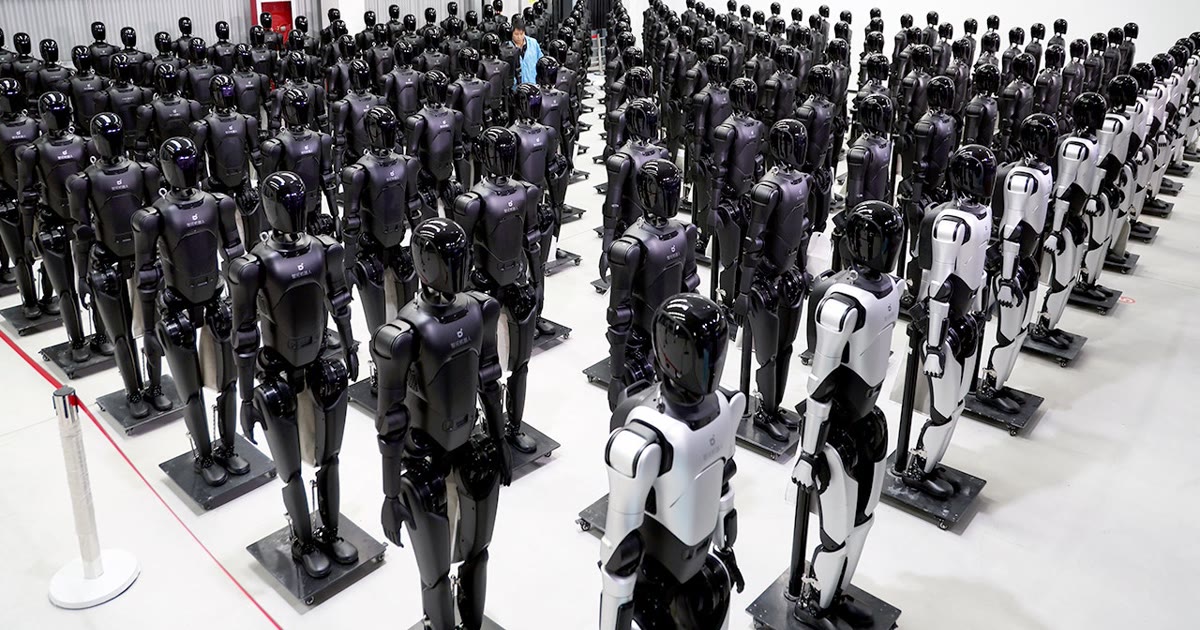
Shanghai's World Artificial Intelligence Conference this year treated humanoids as a central industrial strategic pillar rather than an exhibit-hall curiosity, according to Jiemian. Keynote sessions at the conference positioned the humanoid category alongside foundation models and semiconductors as one of three formally coordinated legs of China's broader national AI strategy going forward.
That framing matters because it changes the underlying funding logic directly rather than merely symbolically. When humanoids sit at the strategic policy level rather than the individual-product level, capital allocation, government procurement mandates, and city-level pilot programs can align around a single coordinated narrative instead of reacting separately to each company's launch, materially speeding up how quickly capital and policy support reach the sector.
For APAC observers watching closely, the underlying signal was genuinely unambiguous: China is deliberately pairing foundation-model capability with physical embodiment as one combined export narrative, aimed simultaneously at domestic industry that needs a coordinated growth story and at foreign buyers evaluating integrated hardware-plus-AI stacks rather than components sold separately, a positioning that mirrors how China previously bundled hardware and software together in its telecom-equipment exports to build lasting customer lock-in well beyond the initial sale.
Japanese and Korean firms in attendance at the conference faced an explicit strategic choice as a direct result: partner with Chinese platforms early while terms are favorable, or build differentiated proprietary stacks at higher cost and slower speed. Reuters coverage noted the scale of official attention the humanoid sessions received relative to other AI subfields, reinforcing this was a deliberate positioning choice by conference organizers rather than an organic outcome of exhibitor interest.
Editor's take — we think the three-pillar framing is itself the policy instrument, not a description of one. By declaring humanoids a pillar alongside chips and foundation models, Beijing makes it politically costly for provincial officials to under-invest in the category, regardless of whether the underlying commercial case for any individual company involved is fully proven yet. That is how China moved solar panel and electric-vehicle production from policy narrative to global manufacturing scale before — the narrative arrives first, and the capital is obligated to follow it, whether or not unit economics have caught up yet.
If that pattern holds, expect formal provincial humanoid procurement programs to be announced within the next two to three months, not years, because the political cost of visible under-investment after a national strategic pillar declaration is now higher than the cost of an imperfect early rollout. Watch specifically for programs bundling humanoids with existing smart-city and eldercare budgets already in place, since that bundling is the fastest and most politically frictionless path to real spending without requiring fresh legislative approval or a standalone budget line.
What to watch next is procurement, not rhetoric: if provincial governments emerge from WAIC with formal humanoid buying programs announced within the following weeks, that confirms the shift from strategic narrative to executed policy, and the size of the first announced budget will matter more than the number of provinces participating.
The open risk is the opposite outcome. If the conference framing does not translate into actual procurement commitments within a reasonable window, the three-pillar narrative will read as messaging rather than a genuine reallocation of state resources, and foreign firms that partnered early on the strength of the framing alone, rather than on signed contracts, would be the ones left most exposed.