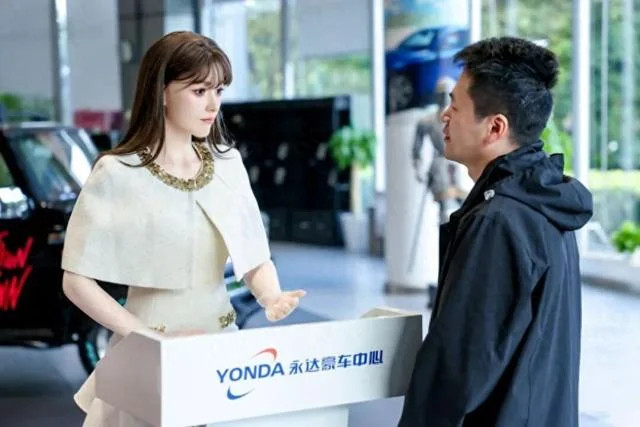
What did Yongda Auto order from UBTECH for its showrooms?
Yongda agreed to buy 400 stationary U1 Pro humanoids for showroom conversations and product explanations. The contract price was not disclosed; an order is not a delivery count. Sources
400 units for car showrooms
UBTECH signed an agreement on November 11 with Yongda Auto, one of China's large car dealer groups, for 400 U1 Pro ultra-bionic humanoid robots, with delivery planned within 2026. Chinese media describe it as the first disclosed bulk order for the U1 line.
Yongda plans to use the robots for product explanations, sales promotion and customer service in its showrooms. The two companies also plan a joint showroom center in Shanghai.
What the U1 Pro is, and is not
The U1 Pro is a realistic-looking companion and conversation robot. Eastmoney reports that it does not walk autonomously, so it is designed to greet and talk with customers from a fixed position rather than move around a showroom.
The contract value was not disclosed. The U1 Pro is listed on JD.com at 169,800 yuan per unit, which led some media to estimate the order at about 67.9 million yuan; that figure is a list-price calculation, not a disclosed price.
Editorial analysis: Showrooms are a sensible first market
Car showrooms suit a stationary, talkative robot: customers arrive with time to spare, product information is structured and novelty can support sales.
The open questions are whether 400 units bring measurable gains in visits, test drives or sales, and how much staff time the robots need for setup and updates. Dealers elsewhere in Asia will watch Yongda's results more closely than the signing itself.
Editorial perspective: The showroom already has a rival for the U1 Pro: a screen
A stationary robot does not have to navigate a crowded showroom, but that advantage also gives the dealer a cheap alternative. A screen beside the car can explain trim levels. A salesperson can handle a trade-in or an unusual financing question. The case for the U1 Pro lies in the gap between those jobs: can a conversation help a hesitant visitor decide what to ask a person?
Yongda could test that without confusing curiosity with sales. Rotate the robot and a screen between comparable showrooms, keep the model and promotions the same, and count visitors who go on to complete a test drive. Then repeat after the novelty wears off. A smaller but persistent lift would tell dealers more than a packed showroom on launch day.