Fourier Intelligence
The research community's general-purpose humanoid platform — open, NVIDIA Isaac Lab compatible, and deployed in hospitals and automotive plants alike.
Where the global research community meets commercial humanoid deployment.
Founded in Shanghai in 2015, Fourier Intelligence began as a rehabilitation robotics company — building exoskeletons for stroke recovery and physical therapy. That origin shapes everything: the company's actuators, sensing systems, and control software were all designed with human-adjacent safety and compliance as baseline requirements, not afterthoughts. When Fourier transitioned into general-purpose humanoids with the GR-1 in 2023, it brought a decade of human-safe actuator development that most newer entrants simply do not have.
Fourier's academic partnerships set it apart within China's humanoid landscape. Collaborations with MIT, Carnegie Mellon, and integration with NVIDIA's Isaac Lab simulation ecosystem mean the GR platform is a standard testbed for global AI and robotics researchers. The GR-2's compatibility with NVIDIA Isaac Lab — enabling sim-to-real transfer of trained policies — places Fourier at the centre of the VLA model training pipeline that is rapidly becoming the standard for next-generation humanoid intelligence.
On the commercial side, Fourier has secured real-world deployments across two demanding environments: Shanghai hospital networks, where the N2 platform supports elder care and patient assistance workflows, and automotive assembly environments, where the GR-2 Pro's industrial actuators handle the torque requirements of body panel work. This dual deployment — healthcare and heavy industry — demonstrates a breadth of application that few Chinese humanoid companies have achieved, and positions Fourier as a bridge between the research and production worlds.
Humanoid Robot Models
Fourier's first commercially available general-purpose humanoid and the platform that established the company's GR architecture. With 44 DOF and full ROS support, the GR-1 became the entry point for research institutions and AI labs worldwide seeking a production-grade humanoid at a mid-range price. Its open research platform design enables teams to deploy custom control policies, manipulation models, and locomotion algorithms without hardware lock-in.
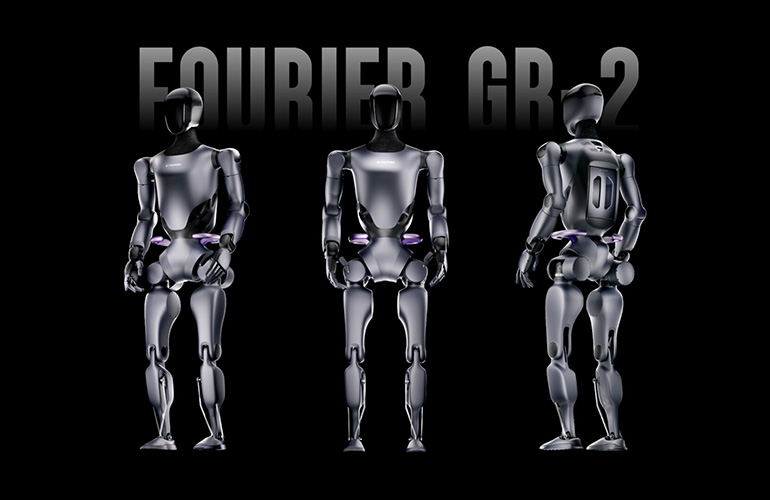
The second-generation GR platform brings 53 DOF, upgraded FSA 2.0 actuators, and 12-DOF tactile hands with real-time force-adaptive grasping. The GR-2 is fully compatible with NVIDIA Isaac Lab, enabling researchers to train VLA models in simulation and transfer them directly to hardware — a capability that makes it the platform of choice for cutting-edge embodied AI research. A swappable battery system ensures approximately two hours of runtime per charge.
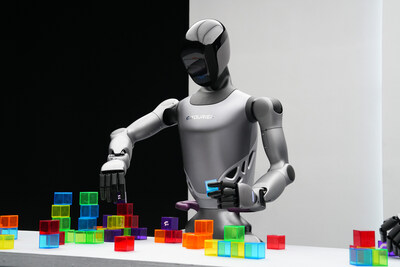
Fourier's 2025 next-generation platform designed specifically for healthcare and elder care environments. The N2 features a lighter frame and improved locomotion optimised for navigating hospital corridors, patient rooms, and care facilities safely alongside humans. In active pilot deployment with multiple Shanghai hospital networks, the N2 represents Fourier's bridge back to its rehabilitation robotics origins — now at humanoid scale.
The industrial variant of the GR-2, purpose-built for automotive assembly environments where the standard GR-2's actuators are insufficient for the torque requirements of body panel work. Enhanced-torque FSA actuators, a 15 kg payload capacity, and reinforced joint assemblies make the GR-2 Pro capable of the heavy manipulation tasks that automotive lines demand — while retaining the GR-2's NVIDIA Isaac Lab compatibility for AI model deployment.
Is this your company?
Keep your Fourier Intelligence profile accurate and up to date for the APAC humanoid community.
Claim or Update This ListingList your brand for free →