Asia-Pacific · Analysis
National Champions: How Korea, Japan and China Are Backing Their Own Humanoids
Seoul has launched a 53.5 billion won humanoid challenge, Japan's prime minister is meeting robot startups and Tokyo's megabanks are lending to them, and Beijing is setting the standards. Humanoids have become industrial policy across Asia-Pacific.
3 min read
How do Asia’s humanoid robot industrial policies differ?
Korea is funding a competition, Japan is combining industrial targets with private-sector initiatives, and China has issued technical standards. India’s summit offers a market signal, not an equivalent national program. Sources
From market to strategy
A year ago, most governments treated humanoids as a promising technology. In November 2026, they started treating them as a strategic industry. Korea, Japan and China are each using different tools, but the goal is the same: make sure domestic companies, not only foreign ones, build the robots their factories and homes will rely on.
Korea: compete to qualify
Korea's Ministry of Science and ICT outlined the Next-X Humanoid Challenge on November 24. It will invest 53.5 billion won over five years from 2027. About 10 teams will be selected in April 2027 and receive 1 billion to 3 billion won each, plus access to government GPUs, physical AI data and simulation. Teams cannot enter by buying and modifying complete foreign humanoids. The final is set for November 2028.
- Championship track for teams building their own platforms
- Open Platform track for AI and software on Korean robots
- Shared missions such as supporting independent living and hazardous tasks
Japan: political attention and private capital
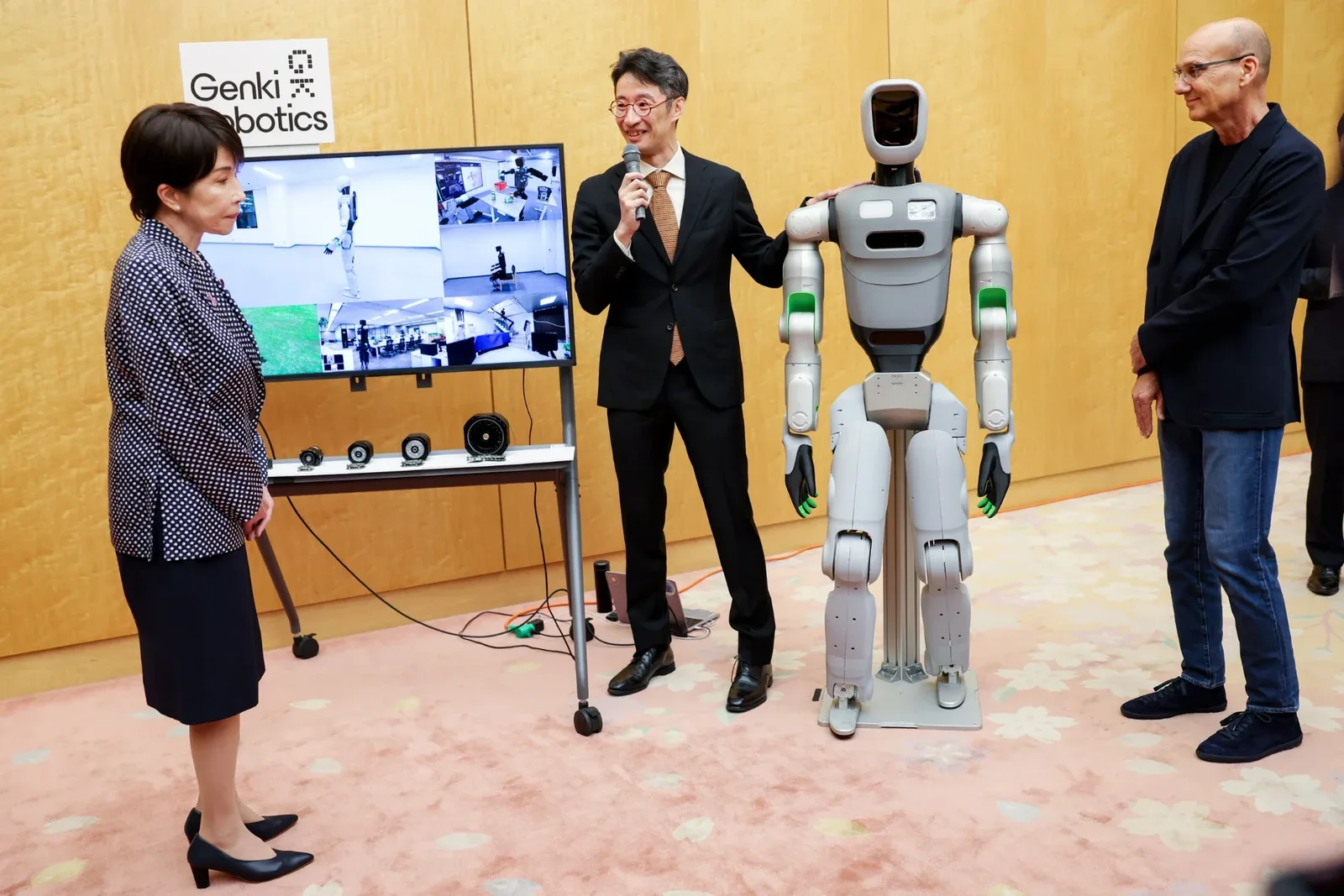
Japan's approach combines visibility and finance. Prime Minister Sanae Takaichi viewed Genki Robotics' humanoid prototype at her office on November 12; her industrial agenda lists physical AI among 17 strategic fields, and Japan has set a goal of 10 million AI robots by 2040. Tokyo startup Atom secured 4.5 billion yen in credit lines from Japan's three megabanks, while Yaskawa Electric said it will launch an AI humanoid by 2030. Established industrial firms and startups are moving at the same time.
China: set the rules at scale
China already leads in volume, so its policy focus is on structure. The five industry standards issued on November 16 cover training grounds, data, intelligence grading, joints and dexterous hands. By defining how robots are graded and how components are tested, China makes its own supply chain the reference point that others may need to follow.
India enters the conversation
India is earlier in the cycle. At the Bengaluru Tech Summit in November, a Unitree representative told The Times of India that about 50 humanoids had been sold in the country, and local startups showed their own machines. India's policy direction for humanoids is less defined, but demand is visible.
What to watch
National programs can speed development, but they also risk fragmenting the market if each country builds incompatible platforms and rules. Watch which Next-X teams are selected, whether Japan turns its robot target into procurement, and whether Chinese standards are adopted by companies outside China.
Editorial perspective: Four countries, four different things being counted
A competition budget, a bank credit limit, a technical standard and a vendor’s account of units sold do not belong in the same league table. Korea’s challenge buys teams time to develop; Japan’s bank facilities give one borrower room to invest; China’s standards offer a way to specify performance; the Bengaluru sales report points to buyers without identifying them. None of those measures, on its own, counts robots doing useful work.
For a fair follow-up, choose one task that matters to an employer and trace it through each system. Did a funded team reach a paying customer? Did credit finance a machine that the customer accepted? Did a standard appear in the tender? Did a buyer order a second unit for the same job? Those answers can reveal which policy removed a real obstacle without pretending that every country is running the same race.