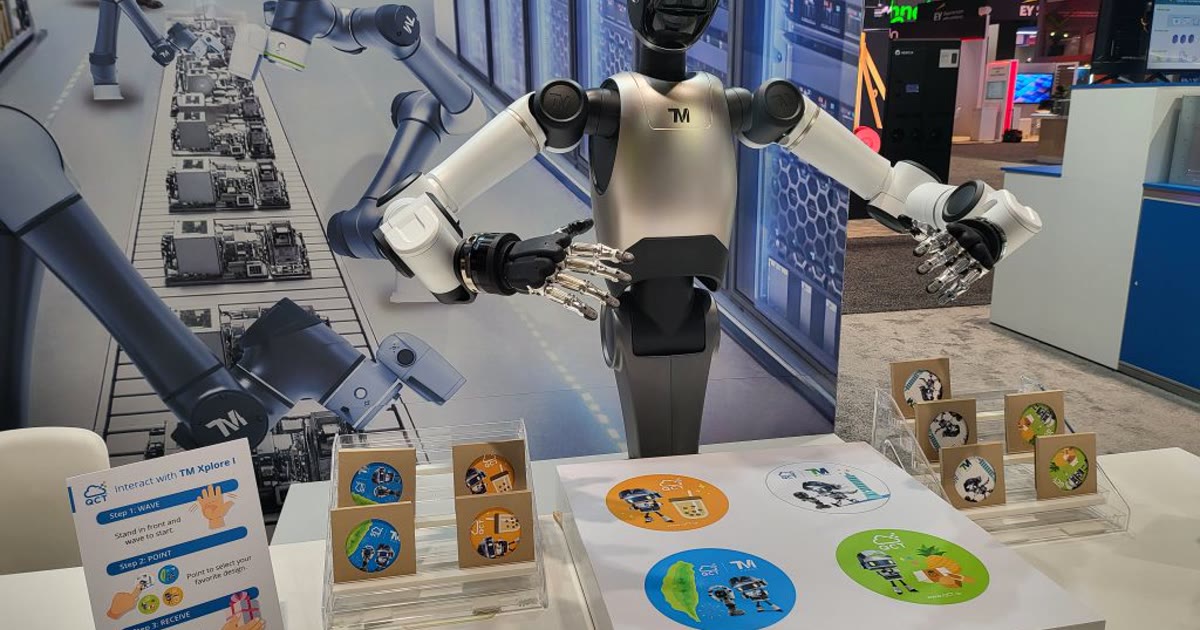
Taiwan's robotics manufacturers are extending their reach from industrial robot arms into full humanoid systems, with Techman Robot and at least one other unnamed Taiwanese tech company unveiling new humanoid platforms in June 2026. According to Tech Wire Asia, the announcements mark Taiwan's clearest move yet toward competing directly in the humanoid robotics category, rather than limiting its role to the supply-chain component manufacturing the island is already known for.
Techman Robot's TM Xplore I, first shown publicly at NVIDIA's GTC 2026 conference earlier in the year, has continued to draw attention as one of the more mature wheeled-humanoid designs from a Taiwanese manufacturer. Techman, which built its reputation on collaborative robot arms for manufacturing, is positioning Xplore I as a natural extension of that industrial expertise — a platform aimed at factory and logistics environments where the company already has established customer relationships, rather than starting from scratch in an unfamiliar market segment.
Factories First, Healthcare Later
Tech Wire Asia's reporting notes that both Techman and the unnamed second manufacturer are explicitly sequencing their go-to-market strategy: factories and logistics operations first, with healthcare and care-giving applications positioned as a second-phase expansion once the platforms have proven reliability in more controlled industrial settings. This mirrors the broader industry pattern of humanoid makers deploying into structured, repetitive-task environments before attempting the more variable and safety-critical demands of healthcare or eldercare settings.
Taiwan's Structural Advantage — and Its Gap
Taiwan's position in the global electronics and semiconductor supply chain gives its robotics manufacturers a genuine structural advantage: component sourcing, precision manufacturing, and integration with existing automation customers are all capabilities Taiwanese firms have refined over decades. What Taiwan has lacked, until moves like Techman's Xplore I, is a credible domestic entrant building complete humanoid systems rather than supplying parts or subsystems to others. Whether Techman and its peers can scale humanoid production the way mainland Chinese manufacturers like Unitree and AGIBOT have — at high volume and rapidly falling cost — will determine whether Taiwan becomes a meaningful humanoid manufacturing hub in its own right, or remains primarily a components supplier to other countries' finished robots.